
Best Potting Mix Ratio Using Vermicompost & Cocopeat for Nurseries
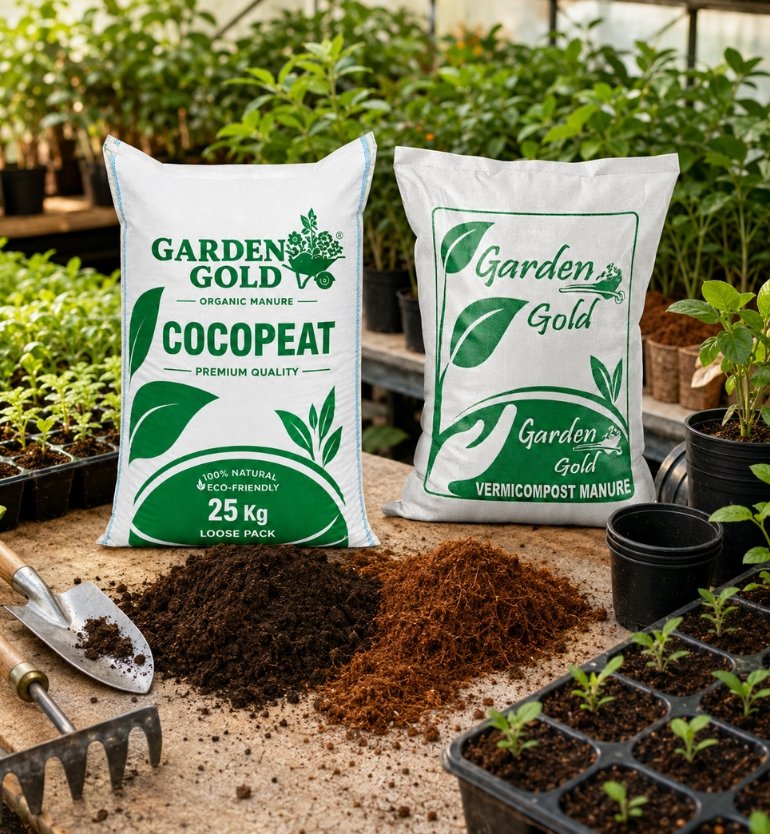
Ask any experienced nursery owner what makes the difference between a sapling that struggles and one that thrives, and most will point to the same thing: what’s in the pot. Plain garden soil alone is often too dense, drains poorly, and lacks the nutrients a young root system needs to establish quickly. That’s why most professional nurseries don’t pot in soil alone – they use a blended mix, and vermicompost combined with cocopeat is one of the most reliable combinations for Gujarat’s climate and commonly grown nursery stock.
This guide covers the ratios, the reasoning behind them, and how to adjust for different plant types.
Why Vermicompost + Cocopeat Works Better Than Soil Alone
Vermicompost supplies a steady, slow-release source of nutrients and beneficial microbes that support root development without the risk of burning young roots the way chemical fertilizers can.
Cocopeat is lightweight, holds moisture exceptionally well, and creates the loose, well-aerated structure that root systems need to spread easily — something dense garden soil often can’t provide, especially in nursery containers and poly bags.
Together, they create a mix that retains moisture, drains excess water, stays light enough for easy transport and transplanting, and feeds the plant gradually.
Recommended Vermicompost to Cocopeat Ratio
For most general-purpose nursery potting needs:
- General seedlings and saplings: 1 part vermicompost : 2 parts cocopeat : 1 part garden soil (or sand for better drainage)
- Flowering and ornamental plants: 1 part vermicompost : 1 part cocopeat : 1 part soil — slightly richer mix for plants with higher nutrient demand
- Fruit tree saplings (mango, lemon, pomegranate): 1 part vermicompost : 1 part cocopeat : 2 parts soil — more structural soil for plants that will stay in larger containers longer
- Delicate or sensitive seedlings (vegetables, herbs): 1 part vermicompost : 3 parts cocopeat — a lighter, gentler mix to avoid overwhelming small root systems
These ratios are a starting point — nurseries dealing with specific crops in volume may want to test and adjust slightly based on results over a season.
Step-by-Step: Preparing the Mix
- Moisten the cocopeat block and break it apart fully before mixing (dry cocopeat is hard to blend evenly).
- Combine vermicompost and cocopeat thoroughly so nutrients are distributed evenly throughout the mix.
- Add soil or sand if your ratio calls for it, mixing until the texture is uniform – not clumpy, not too loose.
- Fill trays or poly bags loosely; avoid compacting the mix too tightly, which restricts root expansion.
- Water lightly after filling to settle the mix before sowing seeds or transplanting cuttings.
Common Mistakes Nurseries Should Avoid
- Using too much vermicompost relative to cocopeat — this can make the mix too dense and reduce drainage, increasing root rot risk in over-watered conditions.
- Skipping the moistening step for cocopeat — dry cocopeat blocks don’t blend evenly and leave dry pockets in the mix.
- Reusing old potting mix without refreshing it — nutrients deplete over a growing cycle; topping up with fresh vermicompost between batches keeps quality consistent.
- Buying inconsistent-quality vermicompost — a mix is only as good as its weakest ingredient; inconsistent vermicompost batches lead to inconsistent seedling results.
Yes, for many nursery applications, a soil-less mix of vermicompost and cocopeat works well, especially for seed germination trays. Soil is typically added for saplings that will stay potted longer and need more structural support.
For saplings kept in containers for several months, top-dressing with a small amount of fresh vermicompost every 6-8 weeks helps maintain nutrient levels as the original mix depletes.
Cocopeat alone provides almost no nutrients — it's primarily a structural and moisture-retention medium. Vermicompost is what actually feeds the plant, so the combination outperforms either ingredient used alone.
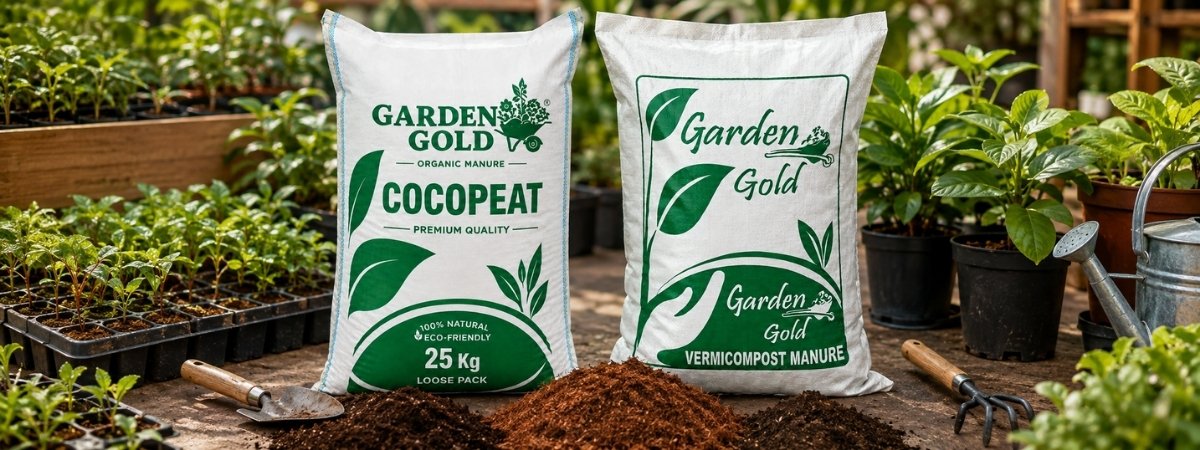
Garden Gold supplies both directly from our facility in Mogar, Dist. Anand, in bulk quantities suited to nursery-scale demand, with no distributor markup.
Source Both Ingredients From One Reliable Supplier
Nurseries that source vermicompost and cocopeat from the same consistent manufacturer tend to see more predictable results across batches, since both inputs are quality-controlled together. Garden Gold supplies both directly from our own facility, helping nurseries across Gujarat maintain a reliable potting mix season after season.
