
Government Subsidy Schemes for Organic Manure & Vermicompost in Gujarat
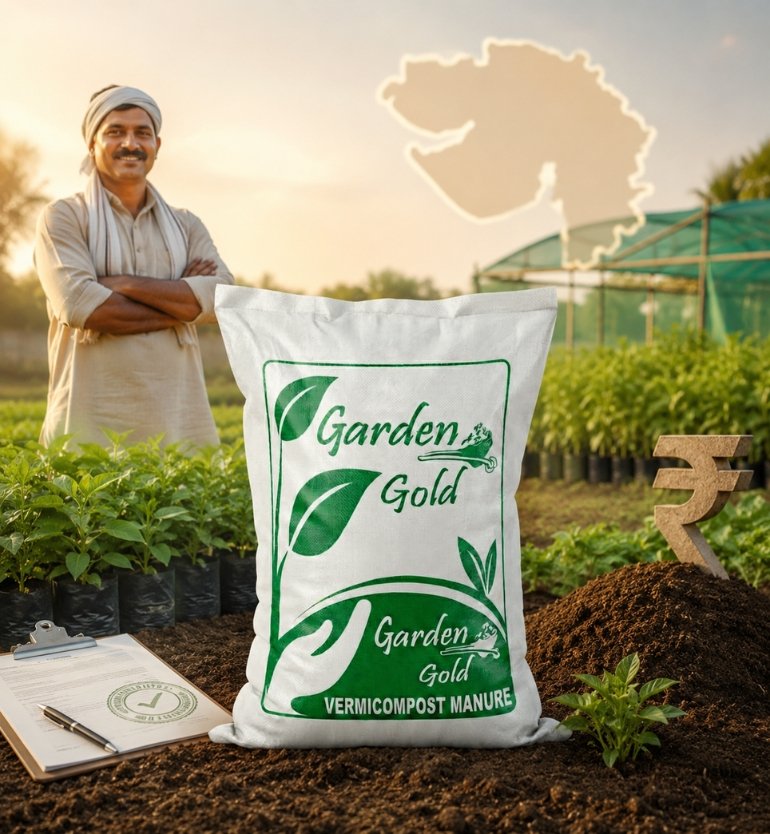
Government Subsidy Schemes for Organic Manure & Vermicompost in Gujarat Home / August 6, 2026 vermi_admin Many farmers in Gujarat are aware that organic inputs like vermicompost improve soil health, but fewer are aware that several government schemes can directly reduce the cost of switching to organic farming practices. Whether you’re a smallholder farmer, part of a cooperative, or running a Farmer Producer Organization, understanding what support is available can make the transition to organic inputs significantly more affordable. This guide breaks down the major schemes relevant to vermicompost and organic manure use in Gujarat, and how to access them. Note: Scheme details, subsidy percentages, and application processes are revised periodically by central and state agriculture departments. Always confirm current terms with your local Krishi Vigyan Kendra (KVK) or agriculture office before applying. Why This Matters for Vermicompost Adoption Vermicompost typically costs more upfront per bag than chemical fertilizer, even though it delivers better long-term soil health and reduces input costs over time. Subsidy schemes are designed to offset that upfront cost gap, making organic inputs more accessible, especially for smallholder and marginal farmers who are price-sensitive in the short term. Key Schemes Farmers Should Know About Paramparagat Krishi Vikas Yojana (PKVY) A central government scheme promoting organic farming through cluster-based approaches, where farmer groups are supported in adopting organic inputs, including vermicompost, over a multi-year transition period. Soil Health Card Scheme While not a direct subsidy, the Soil Health Card scheme provides farmers with soil test results and specific recommendations — often including organic input recommendations like vermicompost dosage — that can help justify and plan organic input purchases more precisely, reducing waste and over-application. National Mission for Sustainable Agriculture (NMSA) This mission supports a broader shift toward sustainable and climate-resilient farming practices, with components that support organic input adoption, including composting and vermicomposting infrastructure in some cases. Gujarat State Organic Farming Schemes Gujarat’s agriculture department has periodically run state-level schemes supporting organic certification, organic input subsidies, and support for vermicompost units, often administered through district agriculture offices and KVKs. These schemes and their terms change year to year, so checking with your local agriculture office for the current year’s program is essential. Mission Organic Value Chain Development Particularly relevant for farmers in hill and tribal areas of Gujarat, this mission supports the full organic value chain, including input subsidies, certification support, and market linkage for organic produce grown with inputs like vermicompost. How to Access These Schemes Visit your local Krishi Vigyan Kendra (KVK) or district agriculture office — they maintain the most current information on active schemes and application windows. Check eligibility criteria carefully — many schemes prioritize smallholder farmers, FPOs, or specific districts/clusters. Keep your Soil Health Card updated — several schemes reference soil health data when approving organic input support. Apply through your FPO or cooperative if you’re a member — group applications are often processed more efficiently and sometimes carry additional collective benefits. Retain purchase invoices from your vermicompost supplier — most subsidy reimbursement processes require documented proof of purchase. Is vermicompost itself directly subsidized in Gujarat? Subsidy availability and percentage vary by scheme, year, and district. Some schemes subsidize organic inputs directly, while others support the broader transition to organic farming, which indirectly reduces the cost burden of inputs like vermicompost. Check with your local KVK or agriculture office for current-year specifics. Do I need to be a certified organic farmer to access these schemes? Not always. Some schemes are designed specifically to help farmers transition toward organic certification, so prior certification isn’t usually required to begin participating. Can Farmer Producer Organizations (FPOs) apply on behalf of multiple farmers? Yes, many schemes are structured around cluster or group-based applications through FPOs and cooperatives, which can simplify the process for individual farmer members. Where can I buy vermicompost that qualifies for subsidy documentation? Most schemes require a valid purchase invoice rather than a specific supplier certification, but it’s worth confirming with your agriculture office. Garden Gold provides proper invoices and documentation for all bulk and retail purchases, which farmers have used for their own scheme applications. We’re Here to Support Your Transition Switching to organic inputs is easier when you have a reliable, consistent supplier alongside the right scheme support. Garden Gold supplies vermicompost directly from our facility in Mogar, Dist. Anand, with proper invoicing for farmers applying through government schemes or FPO programs. Previous Post
Best Potting Mix Ratio Using Vermicompost & Cocopeat for Nurseries
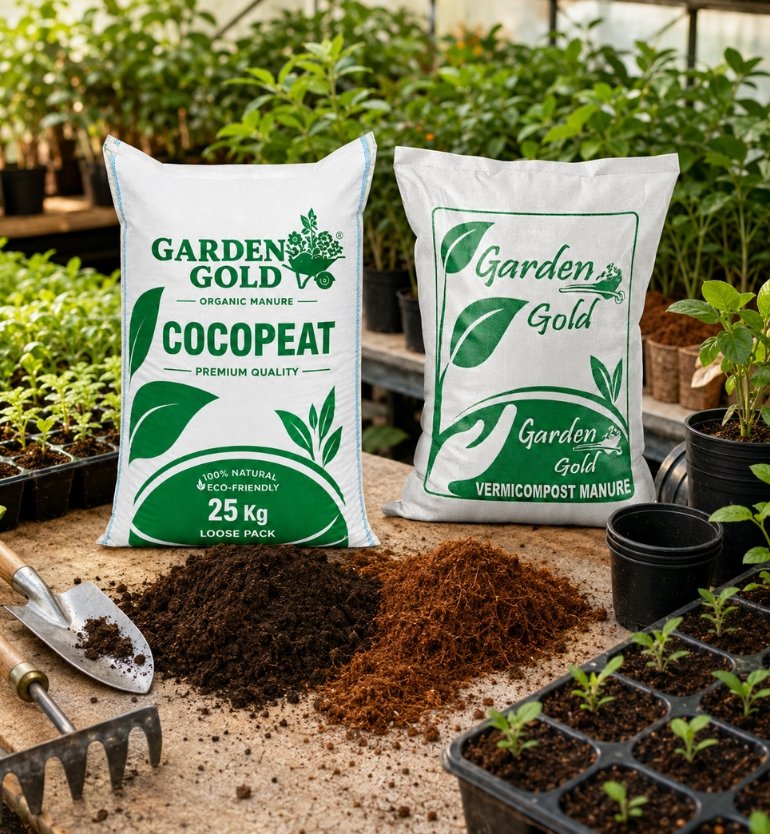
How to Identify Fake or Adulterated Vermicompost Before You Buy – Copy Home / August 6, 2026 vermi_admin Ask any experienced nursery owner what makes the difference between a sapling that struggles and one that thrives, and most will point to the same thing: what’s in the pot. Plain garden soil alone is often too dense, drains poorly, and lacks the nutrients a young root system needs to establish quickly. That’s why most professional nurseries don’t pot in soil alone – they use a blended mix, and vermicompost combined with cocopeat is one of the most reliable combinations for Gujarat’s climate and commonly grown nursery stock. This guide covers the ratios, the reasoning behind them, and how to adjust for different plant types. Why Vermicompost + Cocopeat Works Better Than Soil Alone Vermicompost supplies a steady, slow-release source of nutrients and beneficial microbes that support root development without the risk of burning young roots the way chemical fertilizers can. Cocopeat is lightweight, holds moisture exceptionally well, and creates the loose, well-aerated structure that root systems need to spread easily — something dense garden soil often can’t provide, especially in nursery containers and poly bags. Together, they create a mix that retains moisture, drains excess water, stays light enough for easy transport and transplanting, and feeds the plant gradually. Recommended Vermicompost to Cocopeat Ratio For most general-purpose nursery potting needs: General seedlings and saplings: 1 part vermicompost : 2 parts cocopeat : 1 part garden soil (or sand for better drainage) Flowering and ornamental plants: 1 part vermicompost : 1 part cocopeat : 1 part soil — slightly richer mix for plants with higher nutrient demand Fruit tree saplings (mango, lemon, pomegranate): 1 part vermicompost : 1 part cocopeat : 2 parts soil — more structural soil for plants that will stay in larger containers longer Delicate or sensitive seedlings (vegetables, herbs): 1 part vermicompost : 3 parts cocopeat — a lighter, gentler mix to avoid overwhelming small root systems These ratios are a starting point — nurseries dealing with specific crops in volume may want to test and adjust slightly based on results over a season. Step-by-Step: Preparing the Mix Moisten the cocopeat block and break it apart fully before mixing (dry cocopeat is hard to blend evenly). Combine vermicompost and cocopeat thoroughly so nutrients are distributed evenly throughout the mix. Add soil or sand if your ratio calls for it, mixing until the texture is uniform – not clumpy, not too loose. Fill trays or poly bags loosely; avoid compacting the mix too tightly, which restricts root expansion. Water lightly after filling to settle the mix before sowing seeds or transplanting cuttings. Common Mistakes Nurseries Should Avoid Using too much vermicompost relative to cocopeat — this can make the mix too dense and reduce drainage, increasing root rot risk in over-watered conditions. Skipping the moistening step for cocopeat — dry cocopeat blocks don’t blend evenly and leave dry pockets in the mix. Reusing old potting mix without refreshing it — nutrients deplete over a growing cycle; topping up with fresh vermicompost between batches keeps quality consistent. Buying inconsistent-quality vermicompost — a mix is only as good as its weakest ingredient; inconsistent vermicompost batches lead to inconsistent seedling results. Can I use vermicompost and cocopeat without any soil at all? Yes, for many nursery applications, a soil-less mix of vermicompost and cocopeat works well, especially for seed germination trays. Soil is typically added for saplings that will stay potted longer and need more structural support. How often should nursery potting mix be refreshed with vermicompost? For saplings kept in containers for several months, top-dressing with a small amount of fresh vermicompost every 6-8 weeks helps maintain nutrient levels as the original mix depletes. Is cocopeat alone enough, or is vermicompost necessary? Cocopeat alone provides almost no nutrients — it’s primarily a structural and moisture-retention medium. Vermicompost is what actually feeds the plant, so the combination outperforms either ingredient used alone. Where can nurseries buy vermicompost and cocopeat in bulk in Gujarat? Garden Gold supplies both directly from our facility in Mogar, Dist. Anand, in bulk quantities suited to nursery-scale demand, with no distributor markup. Source Both Ingredients From One Reliable Supplier Nurseries that source vermicompost and cocopeat from the same consistent manufacturer tend to see more predictable results across batches, since both inputs are quality-controlled together. Garden Gold supplies both directly from our own facility, helping nurseries across Gujarat maintain a reliable potting mix season after season. Previous Post
