
Best Potting Mix Ratio Using Vermicompost & Cocopeat for Nurseries
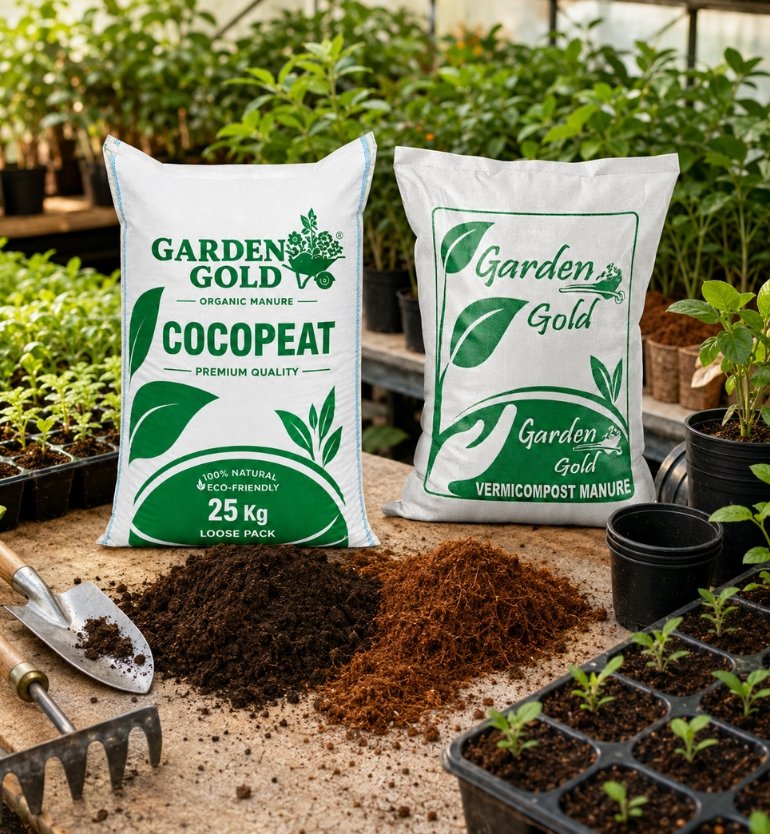
How to Identify Fake or Adulterated Vermicompost Before You Buy – Copy Home / August 6, 2026 vermi_admin Ask any experienced nursery owner what makes the difference between a sapling that struggles and one that thrives, and most will point to the same thing: what’s in the pot. Plain garden soil alone is often too dense, drains poorly, and lacks the nutrients a young root system needs to establish quickly. That’s why most professional nurseries don’t pot in soil alone – they use a blended mix, and vermicompost combined with cocopeat is one of the most reliable combinations for Gujarat’s climate and commonly grown nursery stock. This guide covers the ratios, the reasoning behind them, and how to adjust for different plant types. Why Vermicompost + Cocopeat Works Better Than Soil Alone Vermicompost supplies a steady, slow-release source of nutrients and beneficial microbes that support root development without the risk of burning young roots the way chemical fertilizers can. Cocopeat is lightweight, holds moisture exceptionally well, and creates the loose, well-aerated structure that root systems need to spread easily — something dense garden soil often can’t provide, especially in nursery containers and poly bags. Together, they create a mix that retains moisture, drains excess water, stays light enough for easy transport and transplanting, and feeds the plant gradually. Recommended Vermicompost to Cocopeat Ratio For most general-purpose nursery potting needs: General seedlings and saplings: 1 part vermicompost : 2 parts cocopeat : 1 part garden soil (or sand for better drainage) Flowering and ornamental plants: 1 part vermicompost : 1 part cocopeat : 1 part soil — slightly richer mix for plants with higher nutrient demand Fruit tree saplings (mango, lemon, pomegranate): 1 part vermicompost : 1 part cocopeat : 2 parts soil — more structural soil for plants that will stay in larger containers longer Delicate or sensitive seedlings (vegetables, herbs): 1 part vermicompost : 3 parts cocopeat — a lighter, gentler mix to avoid overwhelming small root systems These ratios are a starting point — nurseries dealing with specific crops in volume may want to test and adjust slightly based on results over a season. Step-by-Step: Preparing the Mix Moisten the cocopeat block and break it apart fully before mixing (dry cocopeat is hard to blend evenly). Combine vermicompost and cocopeat thoroughly so nutrients are distributed evenly throughout the mix. Add soil or sand if your ratio calls for it, mixing until the texture is uniform – not clumpy, not too loose. Fill trays or poly bags loosely; avoid compacting the mix too tightly, which restricts root expansion. Water lightly after filling to settle the mix before sowing seeds or transplanting cuttings. Common Mistakes Nurseries Should Avoid Using too much vermicompost relative to cocopeat — this can make the mix too dense and reduce drainage, increasing root rot risk in over-watered conditions. Skipping the moistening step for cocopeat — dry cocopeat blocks don’t blend evenly and leave dry pockets in the mix. Reusing old potting mix without refreshing it — nutrients deplete over a growing cycle; topping up with fresh vermicompost between batches keeps quality consistent. Buying inconsistent-quality vermicompost — a mix is only as good as its weakest ingredient; inconsistent vermicompost batches lead to inconsistent seedling results. Can I use vermicompost and cocopeat without any soil at all? Yes, for many nursery applications, a soil-less mix of vermicompost and cocopeat works well, especially for seed germination trays. Soil is typically added for saplings that will stay potted longer and need more structural support. How often should nursery potting mix be refreshed with vermicompost? For saplings kept in containers for several months, top-dressing with a small amount of fresh vermicompost every 6-8 weeks helps maintain nutrient levels as the original mix depletes. Is cocopeat alone enough, or is vermicompost necessary? Cocopeat alone provides almost no nutrients — it’s primarily a structural and moisture-retention medium. Vermicompost is what actually feeds the plant, so the combination outperforms either ingredient used alone. Where can nurseries buy vermicompost and cocopeat in bulk in Gujarat? Garden Gold supplies both directly from our facility in Mogar, Dist. Anand, in bulk quantities suited to nursery-scale demand, with no distributor markup. Source Both Ingredients From One Reliable Supplier Nurseries that source vermicompost and cocopeat from the same consistent manufacturer tend to see more predictable results across batches, since both inputs are quality-controlled together. Garden Gold supplies both directly from our own facility, helping nurseries across Gujarat maintain a reliable potting mix season after season. Previous Post
How to Identify Fake or Adulterated Vermicompost Before You Buy
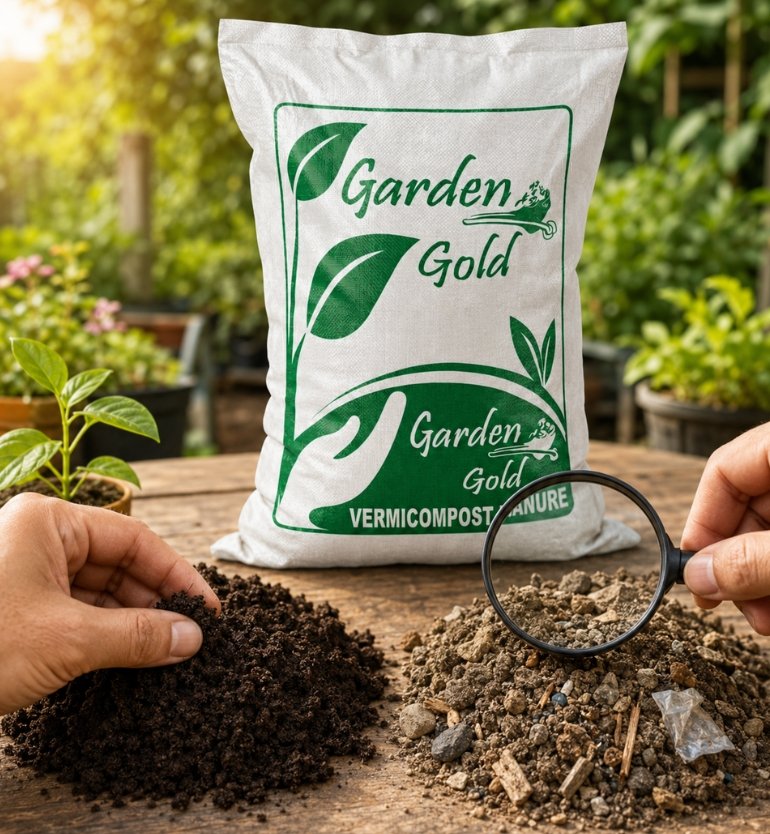
How to Identify Fake or Adulterated Vermicompost Before You Buy Home / July 18, 2026 vermi_admin As demand for organic manure grows across Gujarat, so has the number of sellers offering vermicompost, and not all of them are selling the real thing. Some products labeled “vermicompost” are diluted with ordinary soil, sand, or partially decomposed waste to cut costs and increase bag weight. For a farmer, nursery, or landscaper paying for nutrient-rich compost, that’s money spent on filler material that does little for plant health. Here’s how to check what you’re buying, using simple tests you can do yourself before or after purchase. Why Adulteration Happens Vermicompost production takes time — typically 45 to 90 days for proper decomposition and curing through earthworm activity. Some sellers, trying to meet demand faster or cut costs, mix in cheaper bulk material like garden soil, sand, or partially composted waste that hasn’t fully matured. The result looks similar to genuine vermicompost at a glance but delivers a fraction of the nutrient value. Simple Tests to Check Vermicompost Quality The Texture and Color Test Genuine vermicompost is dark brown to black, fine, crumbly, and uniform in texture — similar to coffee grounds. If you see visible lumps, sand, stones, or inconsistent color throughout the bag, it likely contains filler material. The Smell Test Properly cured vermicompost has a mild, earthy smell — similar to fresh soil after rain. A strong, foul, or ammonia-like odor usually indicates the material wasn’t fully decomposed before packaging, which can actually harm plant roots rather than help them. The Water Float Test Take a small sample and mix it into a glass of water. Genuine vermicompost tends to disperse fairly evenly, with very little heavy sediment settling immediately at the bottom. If a large amount of sand or soil sinks quickly and separates out, the sample likely contains added filler. The Moisture Test Squeeze a handful of vermicompost gently. It should feel slightly moist and hold its shape loosely without dripping water or feeling completely dry and dusty. Excessively dry material may indicate poor curing; soggy material may indicate poor storage or incomplete processing. Check for Visible Earthworm Activity Residue Genuine vermicompost is the byproduct of earthworm digestion and often contains fine castings with a consistent granular structure. Bags that show no sign of this fine, granular texture — and instead look like raw, unprocessed organic waste — likely haven’t gone through a proper vermicomposting cycle. Red Flags When Buying Price significantly lower than the typical market range — quality vermicompost has a real production cost, and unusually cheap pricing is often a sign of dilution Sellers who can’t explain their production process or raw material source No willingness to share batch information, lab reports, or facility details Inconsistent product from the same seller across different purchases Bags that feel unusually heavy for their size, which can indicate added soil or sand as bulk filler What to Ask a Seller Before Buying What raw material is used, and is it consistent across batches? How long is the composting and curing cycle before packaging? Can you share a lab test report showing NPK and organic content? Can I see the production process or facility? Buy From a Source You Can Verify The simplest way to avoid adulterated vermicompost is to buy directly from a manufacturer willing to show you their process. At Garden Gold, our vermicompost is produced from 100% cow dung at our own facility in Mogar, Dist. Anand, with no distributor blending product in between us and you. We’re happy to walk customers through our production process and share quality details before you buy. Does a darker color always mean better quality vermicompost? Dark color is a good general sign, but not definitive on its own — some adulterated products are darkened with added soil. Combine the color check with the smell, texture, and water tests for a more reliable assessment. Can adulterated vermicompost actually harm my plants? Yes. Incompletely decomposed organic material can release heat and ammonia as it continues breaking down in the soil, which can damage roots. Diluted vermicompost with high sand or soil content also delivers far less nutrient value than expected, affecting plant growth and yield. Is there a lab test I can request to confirm quality? Yes, reputable manufacturers can provide an NPK (Nitrogen, Phosphorus, Potassium) and organic carbon content report from a recognized soil testing lab. Always ask your supplier if this is available before placing a large order. How can I trust a supplier without testing every bag myself? Buying directly from a manufacturer with a transparent, visible production process — rather than through resellers who may blend or repackage product — significantly reduces the risk of adulteration, since there’s no additional party altering the product along the way. Previous Post
