
Vermicompost Manufacturer vs Trader: Why Buying Direct Matters
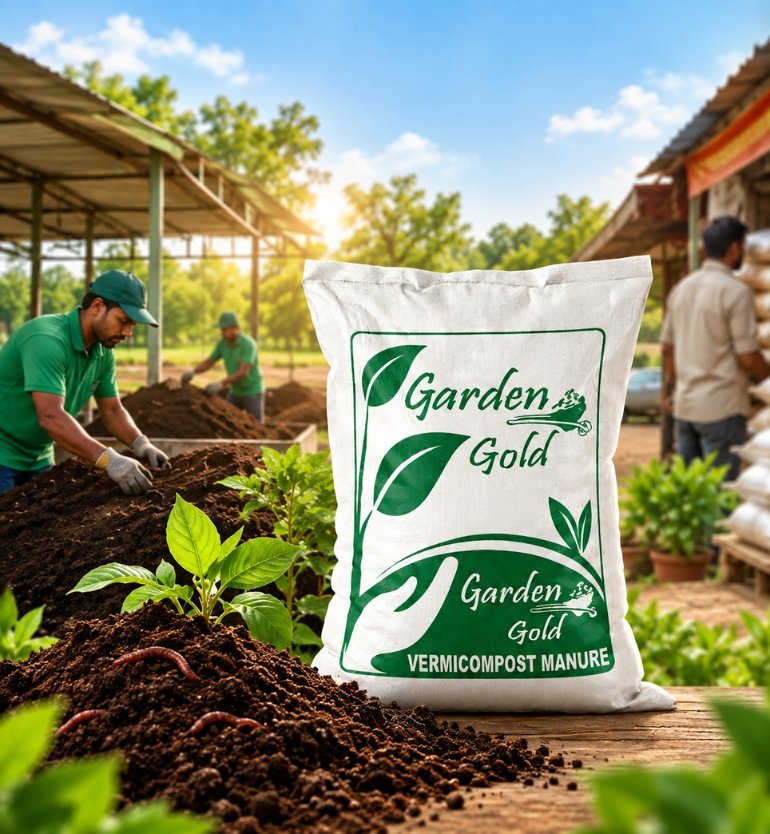
Government Subsidy Schemes for Organic Manure & Vermicompost in Gujarat Home / August 6, 2026 vermi_admin Many farmers in Gujarat are aware that organic inputs like vermicompost improve soil health, but fewer are aware that several government schemes can directly reduce the cost of switching to organic farming practices. Whether you’re a smallholder farmer, part of a cooperative, or running a Farmer Producer Organization, understanding what support is available can make the transition to organic inputs significantly more affordable. This guide breaks down the major schemes relevant to vermicompost and organic manure use in Gujarat, and how to access them. Note: Scheme details, subsidy percentages, and application processes are revised periodically by central and state agriculture departments. Always confirm current terms with your local Krishi Vigyan Kendra (KVK) or agriculture office before applying. Why This Matters for Vermicompost Adoption Vermicompost typically costs more upfront per bag than chemical fertilizer, even though it delivers better long-term soil health and reduces input costs over time. Subsidy schemes are designed to offset that upfront cost gap, making organic inputs more accessible, especially for smallholder and marginal farmers who are price-sensitive in the short term. Key Schemes Farmers Should Know About Paramparagat Krishi Vikas Yojana (PKVY) A central government scheme promoting organic farming through cluster-based approaches, where farmer groups are supported in adopting organic inputs, including vermicompost, over a multi-year transition period. Soil Health Card Scheme While not a direct subsidy, the Soil Health Card scheme provides farmers with soil test results and specific recommendations — often including organic input recommendations like vermicompost dosage — that can help justify and plan organic input purchases more precisely, reducing waste and over-application. National Mission for Sustainable Agriculture (NMSA) This mission supports a broader shift toward sustainable and climate-resilient farming practices, with components that support organic input adoption, including composting and vermicomposting infrastructure in some cases. Gujarat State Organic Farming Schemes Gujarat’s agriculture department has periodically run state-level schemes supporting organic certification, organic input subsidies, and support for vermicompost units, often administered through district agriculture offices and KVKs. These schemes and their terms change year to year, so checking with your local agriculture office for the current year’s program is essential. Mission Organic Value Chain Development Particularly relevant for farmers in hill and tribal areas of Gujarat, this mission supports the full organic value chain, including input subsidies, certification support, and market linkage for organic produce grown with inputs like vermicompost. How to Access These Schemes Visit your local Krishi Vigyan Kendra (KVK) or district agriculture office — they maintain the most current information on active schemes and application windows. Check eligibility criteria carefully — many schemes prioritize smallholder farmers, FPOs, or specific districts/clusters. Keep your Soil Health Card updated — several schemes reference soil health data when approving organic input support. Apply through your FPO or cooperative if you’re a member — group applications are often processed more efficiently and sometimes carry additional collective benefits. Retain purchase invoices from your vermicompost supplier — most subsidy reimbursement processes require documented proof of purchase. Is vermicompost itself directly subsidized in Gujarat? Subsidy availability and percentage vary by scheme, year, and district. Some schemes subsidize organic inputs directly, while others support the broader transition to organic farming, which indirectly reduces the cost burden of inputs like vermicompost. Check with your local KVK or agriculture office for current-year specifics. Do I need to be a certified organic farmer to access these schemes? Not always. Some schemes are designed specifically to help farmers transition toward organic certification, so prior certification isn’t usually required to begin participating. Can Farmer Producer Organizations (FPOs) apply on behalf of multiple farmers? Yes, many schemes are structured around cluster or group-based applications through FPOs and cooperatives, which can simplify the process for individual farmer members. Where can I buy vermicompost that qualifies for subsidy documentation? Most schemes require a valid purchase invoice rather than a specific supplier certification, but it’s worth confirming with your agriculture office. Garden Gold provides proper invoices and documentation for all bulk and retail purchases, which farmers have used for their own scheme applications. We’re Here to Support Your Transition Switching to organic inputs is easier when you have a reliable, consistent supplier alongside the right scheme support. Garden Gold supplies vermicompost directly from our facility in Mogar, Dist. Anand, with proper invoicing for farmers applying through government schemes or FPO programs. Previous Post
Best Vermicompost Supplier Near You in Gujarat: Anand, Ahmedabad, Vadodara, Surat & Rajkot
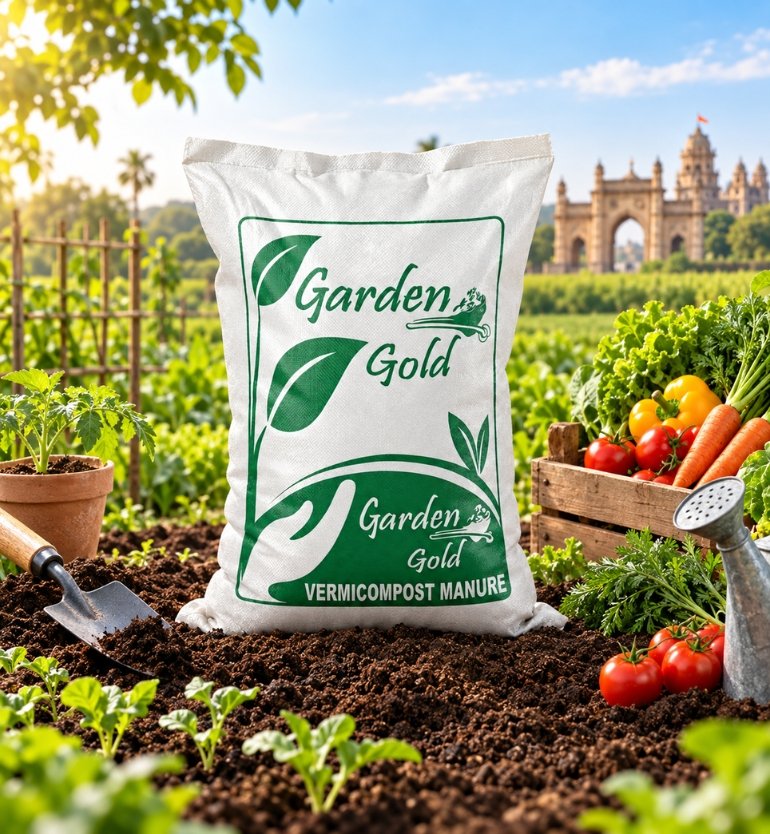
Government Subsidy Schemes for Organic Manure & Vermicompost in Gujarat Home / August 6, 2026 vermi_admin Many farmers in Gujarat are aware that organic inputs like vermicompost improve soil health, but fewer are aware that several government schemes can directly reduce the cost of switching to organic farming practices. Whether you’re a smallholder farmer, part of a cooperative, or running a Farmer Producer Organization, understanding what support is available can make the transition to organic inputs significantly more affordable. This guide breaks down the major schemes relevant to vermicompost and organic manure use in Gujarat, and how to access them. Note: Scheme details, subsidy percentages, and application processes are revised periodically by central and state agriculture departments. Always confirm current terms with your local Krishi Vigyan Kendra (KVK) or agriculture office before applying. Why This Matters for Vermicompost Adoption Vermicompost typically costs more upfront per bag than chemical fertilizer, even though it delivers better long-term soil health and reduces input costs over time. Subsidy schemes are designed to offset that upfront cost gap, making organic inputs more accessible, especially for smallholder and marginal farmers who are price-sensitive in the short term. Key Schemes Farmers Should Know About Paramparagat Krishi Vikas Yojana (PKVY) A central government scheme promoting organic farming through cluster-based approaches, where farmer groups are supported in adopting organic inputs, including vermicompost, over a multi-year transition period. Soil Health Card Scheme While not a direct subsidy, the Soil Health Card scheme provides farmers with soil test results and specific recommendations — often including organic input recommendations like vermicompost dosage — that can help justify and plan organic input purchases more precisely, reducing waste and over-application. National Mission for Sustainable Agriculture (NMSA) This mission supports a broader shift toward sustainable and climate-resilient farming practices, with components that support organic input adoption, including composting and vermicomposting infrastructure in some cases. Gujarat State Organic Farming Schemes Gujarat’s agriculture department has periodically run state-level schemes supporting organic certification, organic input subsidies, and support for vermicompost units, often administered through district agriculture offices and KVKs. These schemes and their terms change year to year, so checking with your local agriculture office for the current year’s program is essential. Mission Organic Value Chain Development Particularly relevant for farmers in hill and tribal areas of Gujarat, this mission supports the full organic value chain, including input subsidies, certification support, and market linkage for organic produce grown with inputs like vermicompost. How to Access These Schemes Visit your local Krishi Vigyan Kendra (KVK) or district agriculture office — they maintain the most current information on active schemes and application windows. Check eligibility criteria carefully — many schemes prioritize smallholder farmers, FPOs, or specific districts/clusters. Keep your Soil Health Card updated — several schemes reference soil health data when approving organic input support. Apply through your FPO or cooperative if you’re a member — group applications are often processed more efficiently and sometimes carry additional collective benefits. Retain purchase invoices from your vermicompost supplier — most subsidy reimbursement processes require documented proof of purchase. Is vermicompost itself directly subsidized in Gujarat? Subsidy availability and percentage vary by scheme, year, and district. Some schemes subsidize organic inputs directly, while others support the broader transition to organic farming, which indirectly reduces the cost burden of inputs like vermicompost. Check with your local KVK or agriculture office for current-year specifics. Do I need to be a certified organic farmer to access these schemes? Not always. Some schemes are designed specifically to help farmers transition toward organic certification, so prior certification isn’t usually required to begin participating. Can Farmer Producer Organizations (FPOs) apply on behalf of multiple farmers? Yes, many schemes are structured around cluster or group-based applications through FPOs and cooperatives, which can simplify the process for individual farmer members. Where can I buy vermicompost that qualifies for subsidy documentation? Most schemes require a valid purchase invoice rather than a specific supplier certification, but it’s worth confirming with your agriculture office. Garden Gold provides proper invoices and documentation for all bulk and retail purchases, which farmers have used for their own scheme applications. We’re Here to Support Your Transition Switching to organic inputs is easier when you have a reliable, consistent supplier alongside the right scheme support. Garden Gold supplies vermicompost directly from our facility in Mogar, Dist. Anand, with proper invoicing for farmers applying through government schemes or FPO programs. Previous Post
Government Subsidy Schemes for Organic Manure & Vermicompost in Gujarat
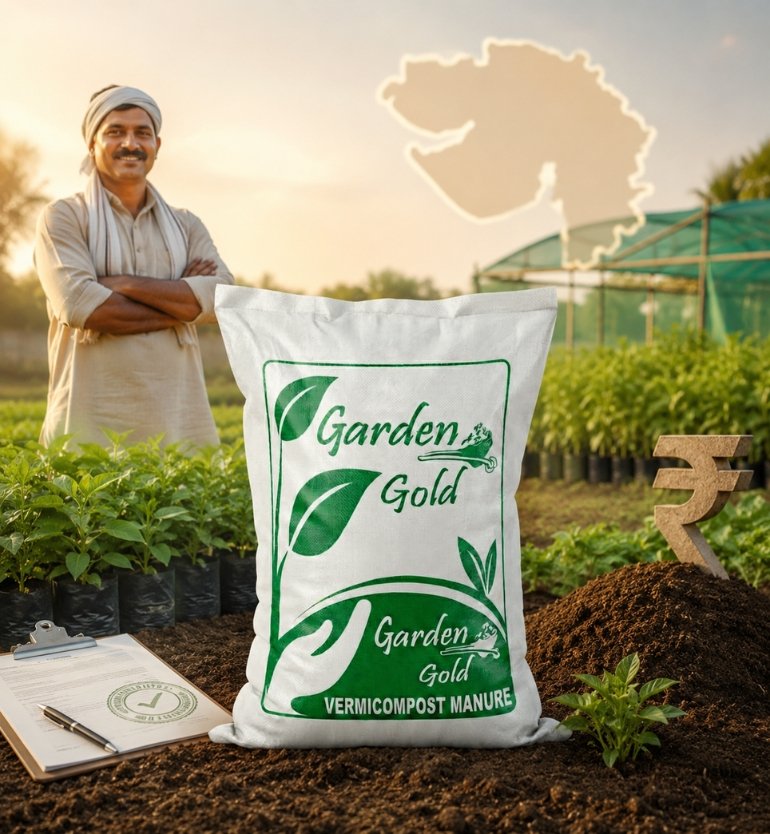
Government Subsidy Schemes for Organic Manure & Vermicompost in Gujarat Home / August 6, 2026 vermi_admin Many farmers in Gujarat are aware that organic inputs like vermicompost improve soil health, but fewer are aware that several government schemes can directly reduce the cost of switching to organic farming practices. Whether you’re a smallholder farmer, part of a cooperative, or running a Farmer Producer Organization, understanding what support is available can make the transition to organic inputs significantly more affordable. This guide breaks down the major schemes relevant to vermicompost and organic manure use in Gujarat, and how to access them. Note: Scheme details, subsidy percentages, and application processes are revised periodically by central and state agriculture departments. Always confirm current terms with your local Krishi Vigyan Kendra (KVK) or agriculture office before applying. Why This Matters for Vermicompost Adoption Vermicompost typically costs more upfront per bag than chemical fertilizer, even though it delivers better long-term soil health and reduces input costs over time. Subsidy schemes are designed to offset that upfront cost gap, making organic inputs more accessible, especially for smallholder and marginal farmers who are price-sensitive in the short term. Key Schemes Farmers Should Know About Paramparagat Krishi Vikas Yojana (PKVY) A central government scheme promoting organic farming through cluster-based approaches, where farmer groups are supported in adopting organic inputs, including vermicompost, over a multi-year transition period. Soil Health Card Scheme While not a direct subsidy, the Soil Health Card scheme provides farmers with soil test results and specific recommendations — often including organic input recommendations like vermicompost dosage — that can help justify and plan organic input purchases more precisely, reducing waste and over-application. National Mission for Sustainable Agriculture (NMSA) This mission supports a broader shift toward sustainable and climate-resilient farming practices, with components that support organic input adoption, including composting and vermicomposting infrastructure in some cases. Gujarat State Organic Farming Schemes Gujarat’s agriculture department has periodically run state-level schemes supporting organic certification, organic input subsidies, and support for vermicompost units, often administered through district agriculture offices and KVKs. These schemes and their terms change year to year, so checking with your local agriculture office for the current year’s program is essential. Mission Organic Value Chain Development Particularly relevant for farmers in hill and tribal areas of Gujarat, this mission supports the full organic value chain, including input subsidies, certification support, and market linkage for organic produce grown with inputs like vermicompost. How to Access These Schemes Visit your local Krishi Vigyan Kendra (KVK) or district agriculture office — they maintain the most current information on active schemes and application windows. Check eligibility criteria carefully — many schemes prioritize smallholder farmers, FPOs, or specific districts/clusters. Keep your Soil Health Card updated — several schemes reference soil health data when approving organic input support. Apply through your FPO or cooperative if you’re a member — group applications are often processed more efficiently and sometimes carry additional collective benefits. Retain purchase invoices from your vermicompost supplier — most subsidy reimbursement processes require documented proof of purchase. Is vermicompost itself directly subsidized in Gujarat? Subsidy availability and percentage vary by scheme, year, and district. Some schemes subsidize organic inputs directly, while others support the broader transition to organic farming, which indirectly reduces the cost burden of inputs like vermicompost. Check with your local KVK or agriculture office for current-year specifics. Do I need to be a certified organic farmer to access these schemes? Not always. Some schemes are designed specifically to help farmers transition toward organic certification, so prior certification isn’t usually required to begin participating. Can Farmer Producer Organizations (FPOs) apply on behalf of multiple farmers? Yes, many schemes are structured around cluster or group-based applications through FPOs and cooperatives, which can simplify the process for individual farmer members. Where can I buy vermicompost that qualifies for subsidy documentation? Most schemes require a valid purchase invoice rather than a specific supplier certification, but it’s worth confirming with your agriculture office. Garden Gold provides proper invoices and documentation for all bulk and retail purchases, which farmers have used for their own scheme applications. We’re Here to Support Your Transition Switching to organic inputs is easier when you have a reliable, consistent supplier alongside the right scheme support. Garden Gold supplies vermicompost directly from our facility in Mogar, Dist. Anand, with proper invoicing for farmers applying through government schemes or FPO programs. Previous Post
Best Potting Mix Ratio Using Vermicompost & Cocopeat for Nurseries
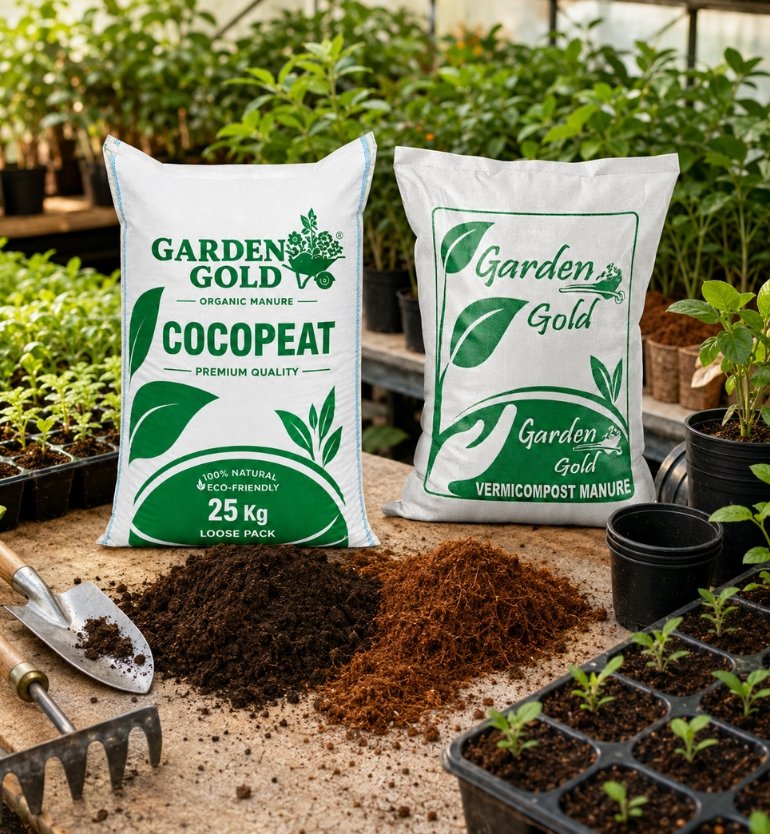
How to Identify Fake or Adulterated Vermicompost Before You Buy – Copy Home / August 6, 2026 vermi_admin Ask any experienced nursery owner what makes the difference between a sapling that struggles and one that thrives, and most will point to the same thing: what’s in the pot. Plain garden soil alone is often too dense, drains poorly, and lacks the nutrients a young root system needs to establish quickly. That’s why most professional nurseries don’t pot in soil alone – they use a blended mix, and vermicompost combined with cocopeat is one of the most reliable combinations for Gujarat’s climate and commonly grown nursery stock. This guide covers the ratios, the reasoning behind them, and how to adjust for different plant types. Why Vermicompost + Cocopeat Works Better Than Soil Alone Vermicompost supplies a steady, slow-release source of nutrients and beneficial microbes that support root development without the risk of burning young roots the way chemical fertilizers can. Cocopeat is lightweight, holds moisture exceptionally well, and creates the loose, well-aerated structure that root systems need to spread easily — something dense garden soil often can’t provide, especially in nursery containers and poly bags. Together, they create a mix that retains moisture, drains excess water, stays light enough for easy transport and transplanting, and feeds the plant gradually. Recommended Vermicompost to Cocopeat Ratio For most general-purpose nursery potting needs: General seedlings and saplings: 1 part vermicompost : 2 parts cocopeat : 1 part garden soil (or sand for better drainage) Flowering and ornamental plants: 1 part vermicompost : 1 part cocopeat : 1 part soil — slightly richer mix for plants with higher nutrient demand Fruit tree saplings (mango, lemon, pomegranate): 1 part vermicompost : 1 part cocopeat : 2 parts soil — more structural soil for plants that will stay in larger containers longer Delicate or sensitive seedlings (vegetables, herbs): 1 part vermicompost : 3 parts cocopeat — a lighter, gentler mix to avoid overwhelming small root systems These ratios are a starting point — nurseries dealing with specific crops in volume may want to test and adjust slightly based on results over a season. Step-by-Step: Preparing the Mix Moisten the cocopeat block and break it apart fully before mixing (dry cocopeat is hard to blend evenly). Combine vermicompost and cocopeat thoroughly so nutrients are distributed evenly throughout the mix. Add soil or sand if your ratio calls for it, mixing until the texture is uniform – not clumpy, not too loose. Fill trays or poly bags loosely; avoid compacting the mix too tightly, which restricts root expansion. Water lightly after filling to settle the mix before sowing seeds or transplanting cuttings. Common Mistakes Nurseries Should Avoid Using too much vermicompost relative to cocopeat — this can make the mix too dense and reduce drainage, increasing root rot risk in over-watered conditions. Skipping the moistening step for cocopeat — dry cocopeat blocks don’t blend evenly and leave dry pockets in the mix. Reusing old potting mix without refreshing it — nutrients deplete over a growing cycle; topping up with fresh vermicompost between batches keeps quality consistent. Buying inconsistent-quality vermicompost — a mix is only as good as its weakest ingredient; inconsistent vermicompost batches lead to inconsistent seedling results. Can I use vermicompost and cocopeat without any soil at all? Yes, for many nursery applications, a soil-less mix of vermicompost and cocopeat works well, especially for seed germination trays. Soil is typically added for saplings that will stay potted longer and need more structural support. How often should nursery potting mix be refreshed with vermicompost? For saplings kept in containers for several months, top-dressing with a small amount of fresh vermicompost every 6-8 weeks helps maintain nutrient levels as the original mix depletes. Is cocopeat alone enough, or is vermicompost necessary? Cocopeat alone provides almost no nutrients — it’s primarily a structural and moisture-retention medium. Vermicompost is what actually feeds the plant, so the combination outperforms either ingredient used alone. Where can nurseries buy vermicompost and cocopeat in bulk in Gujarat? Garden Gold supplies both directly from our facility in Mogar, Dist. Anand, in bulk quantities suited to nursery-scale demand, with no distributor markup. Source Both Ingredients From One Reliable Supplier Nurseries that source vermicompost and cocopeat from the same consistent manufacturer tend to see more predictable results across batches, since both inputs are quality-controlled together. Garden Gold supplies both directly from our own facility, helping nurseries across Gujarat maintain a reliable potting mix season after season. Previous Post
How to Identify Fake or Adulterated Vermicompost Before You Buy
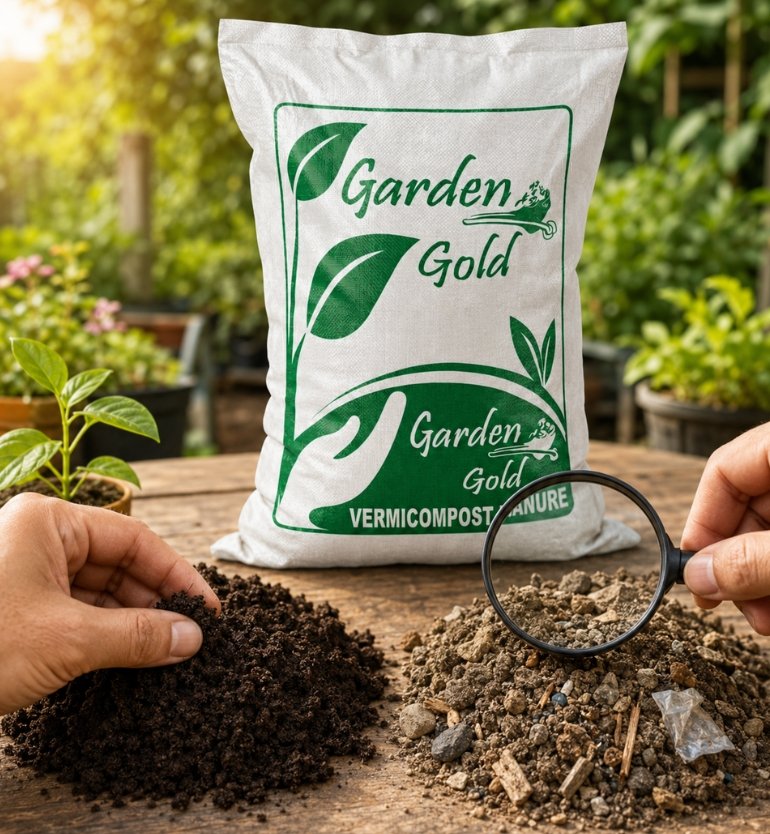
How to Identify Fake or Adulterated Vermicompost Before You Buy Home / July 18, 2026 vermi_admin As demand for organic manure grows across Gujarat, so has the number of sellers offering vermicompost, and not all of them are selling the real thing. Some products labeled “vermicompost” are diluted with ordinary soil, sand, or partially decomposed waste to cut costs and increase bag weight. For a farmer, nursery, or landscaper paying for nutrient-rich compost, that’s money spent on filler material that does little for plant health. Here’s how to check what you’re buying, using simple tests you can do yourself before or after purchase. Why Adulteration Happens Vermicompost production takes time — typically 45 to 90 days for proper decomposition and curing through earthworm activity. Some sellers, trying to meet demand faster or cut costs, mix in cheaper bulk material like garden soil, sand, or partially composted waste that hasn’t fully matured. The result looks similar to genuine vermicompost at a glance but delivers a fraction of the nutrient value. Simple Tests to Check Vermicompost Quality The Texture and Color Test Genuine vermicompost is dark brown to black, fine, crumbly, and uniform in texture — similar to coffee grounds. If you see visible lumps, sand, stones, or inconsistent color throughout the bag, it likely contains filler material. The Smell Test Properly cured vermicompost has a mild, earthy smell — similar to fresh soil after rain. A strong, foul, or ammonia-like odor usually indicates the material wasn’t fully decomposed before packaging, which can actually harm plant roots rather than help them. The Water Float Test Take a small sample and mix it into a glass of water. Genuine vermicompost tends to disperse fairly evenly, with very little heavy sediment settling immediately at the bottom. If a large amount of sand or soil sinks quickly and separates out, the sample likely contains added filler. The Moisture Test Squeeze a handful of vermicompost gently. It should feel slightly moist and hold its shape loosely without dripping water or feeling completely dry and dusty. Excessively dry material may indicate poor curing; soggy material may indicate poor storage or incomplete processing. Check for Visible Earthworm Activity Residue Genuine vermicompost is the byproduct of earthworm digestion and often contains fine castings with a consistent granular structure. Bags that show no sign of this fine, granular texture — and instead look like raw, unprocessed organic waste — likely haven’t gone through a proper vermicomposting cycle. Red Flags When Buying Price significantly lower than the typical market range — quality vermicompost has a real production cost, and unusually cheap pricing is often a sign of dilution Sellers who can’t explain their production process or raw material source No willingness to share batch information, lab reports, or facility details Inconsistent product from the same seller across different purchases Bags that feel unusually heavy for their size, which can indicate added soil or sand as bulk filler What to Ask a Seller Before Buying What raw material is used, and is it consistent across batches? How long is the composting and curing cycle before packaging? Can you share a lab test report showing NPK and organic content? Can I see the production process or facility? Buy From a Source You Can Verify The simplest way to avoid adulterated vermicompost is to buy directly from a manufacturer willing to show you their process. At Garden Gold, our vermicompost is produced from 100% cow dung at our own facility in Mogar, Dist. Anand, with no distributor blending product in between us and you. We’re happy to walk customers through our production process and share quality details before you buy. Does a darker color always mean better quality vermicompost? Dark color is a good general sign, but not definitive on its own — some adulterated products are darkened with added soil. Combine the color check with the smell, texture, and water tests for a more reliable assessment. Can adulterated vermicompost actually harm my plants? Yes. Incompletely decomposed organic material can release heat and ammonia as it continues breaking down in the soil, which can damage roots. Diluted vermicompost with high sand or soil content also delivers far less nutrient value than expected, affecting plant growth and yield. Is there a lab test I can request to confirm quality? Yes, reputable manufacturers can provide an NPK (Nitrogen, Phosphorus, Potassium) and organic carbon content report from a recognized soil testing lab. Always ask your supplier if this is available before placing a large order. How can I trust a supplier without testing every bag myself? Buying directly from a manufacturer with a transparent, visible production process — rather than through resellers who may blend or repackage product — significantly reduces the risk of adulteration, since there’s no additional party altering the product along the way. Previous Post
Vermicompost for Government Garden & Urban Greening Projects: A Buyer’s Guide for Gujarat
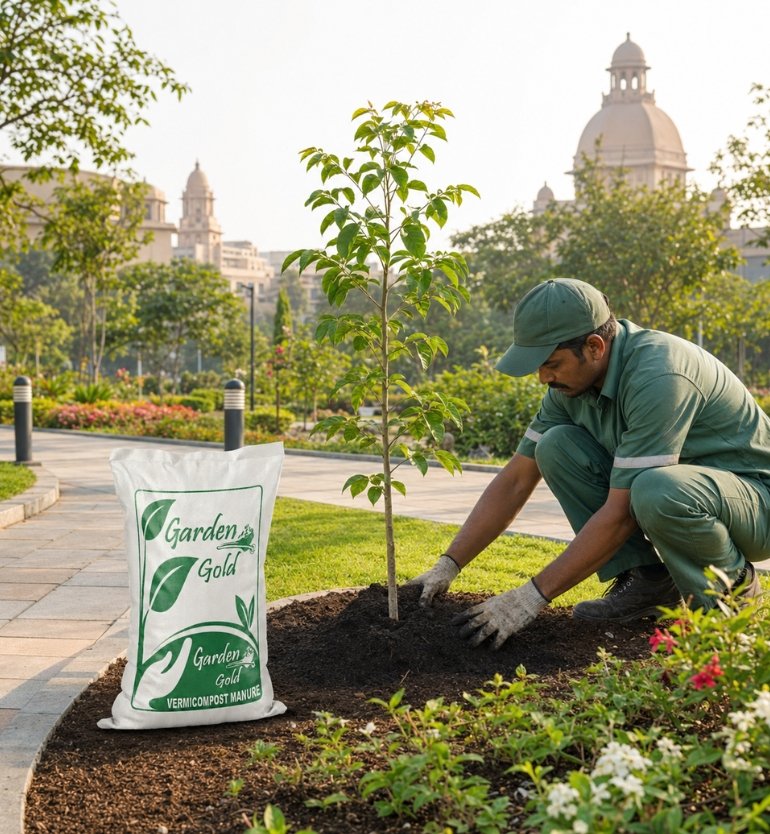
Why Real Estate Developers in Gujarat Are Choosing Vermicompost for Society Gardens & Common Areas – Copy Home / July 17, 2026 vermi_admin Gujarat’s cities are investing heavily in public green spaces — municipal parks, smart city avenue plantations, highway medians, riverfront landscaping, and housing board green belts. Most of these projects run on government budgets and timelines, which means the input supplier needs to deliver on three things simultaneously: consistent quality, large quantity, and dependable timelines. Vermicompost is increasingly the preferred organic input for these projects, but sourcing it for a government or institutional project works differently than sourcing it for a single farm or home garden. This guide covers what civic bodies, PWD horticulture departments, and landscaping contractors working on public tenders should know before specifying or purchasing vermicompost. Why Government Projects Are Moving Toward Vermicompost Chemical fertilizers can damage soil structure over time, especially in urban green belts that don’t get the seasonal rest or rotation that farmland does. Municipal horticulture departments are increasingly specifying organic manure for park lawns, roadside plantations, and median strips because: It improves soil water retention, reducing irrigation costs on large public landscaped areas It builds long-term soil health rather than just feeding the plant short-term, which matters for trees and shrubs maintained over years or decades It aligns with sustainability mandates many smart city and municipal projects now carry It reduces the runoff and groundwater contamination risk associated with chemical fertilizer overuse in public spaces What’s Different About Sourcing for a Government or Institutional Project Volume and Consistency A single municipal park or highway plantation stretch can require several tons of vermicompost. Unlike a retail buyer purchasing a few bags, institutional buyers need a supplier who can confirm production capacity upfront and guarantee the same quality across the entire order — not a mix of batches with varying nutrient content. Documentation Government tenders and PWD purchase processes typically require supporting documentation: product specification sheets, NPK and micronutrient content, manufacturing details, and sometimes lab test reports. A supplier should be able to provide these without delay. Delivery Scheduling Urban greening projects often run on fixed planting windows tied to monsoon timing or project handover dates. A supplier based within Gujarat, supplying directly from their own production site, can commit to delivery schedules far more reliably than an out-of-state trader managing multiple intermediaries. Direct Accountability When a civic project sources through a chain of distributors, accountability for quality issues gets diluted — no one party is fully responsible if a batch underperforms. Sourcing directly from the manufacturer means the same entity that produced the compost is the one answerable for it. Where Vermicompost Is Typically Used in Government & Urban Projects Municipal Park and garden maintenance — lawns, flower beds, and ornamental plantings that need long-term soil health, not just one-season fertilization Avenue and highway plantation — tree belts along roads and highways, where soil is often poor or compacted and benefits significantly from organic amendment Riverfront and lakefront landscaping — large public green corridors with high visibility and high maintenance expectations Housing board and government colony green belts — common area landscaping in public housing developments Smart city green infrastructure — pocket parks, traffic circles, and streetscape greening that’s part of broader urban development plans Questions a Procurement Officer or Contractor Should Ask a Supplier Can you supply the full required tonnage from a single production source, or will the order be split across multiple batches with potential quality variation? Can you provide a specification sheet with NPK content and moisture levels for documentation purposes? What is your delivery timeline for an order of this size, and can you commit to a fixed schedule tied to our planting window? Are you the manufacturer, or are you sourcing from another producer and reselling? Can you provide references from other institutional or government clients you’ve supplied? How Garden Gold Supports Institutional & Government Buyers We manufacture vermicompost directly at our own facility in Mogar, Dist. Anand, with a production capacity of 30,000–40,000 bags (50 kg each), giving us the scale to handle large institutional orders without quality drift across batches. Because we sell direct — with no distributor layer — we can commit to clear delivery timelines and provide full product documentation for tender and procurement requirements. If you’re sourcing vermicompost for a municipal, PWD, smart city, or institutional landscaping project in Gujarat, we’re glad to discuss specifications, volume pricing, and delivery scheduling. Previous Post
Why Real Estate Developers in Gujarat Are Choosing Vermicompost for Society Gardens & Common Areas
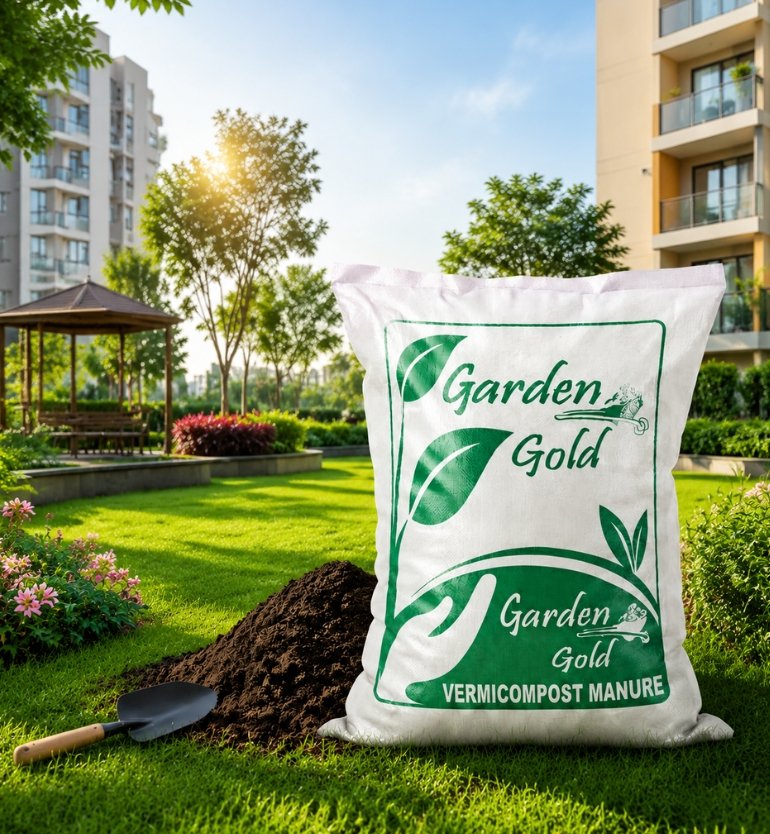
Why Real Estate Developers in Gujarat Are Choosing Vermicompost for Society Gardens Home / July 15, 2026 vermi_admin Landscaped common areas have become a real selling point in residential projects — buyers expect green lawns, healthy trees, and well-maintained gardens not just at handover, but years into living in society. That long-term expectation is exactly where many developers run into trouble: lawns fed only on chemical fertilizer often look good for the launch and site visits, then start declining within a couple of years as soil quality degrades. More developers and facility management teams across Gujarat are now specifying vermicompost for society gardens, villa project landscaping, and commercial common areas — not as a one-time input, but as part of an ongoing soil management plan. Here’s why, and what to consider when sourcing it for a project. The Problem with Chemical-Only Landscaping in Townships Chemical fertilizers feed the plant but do little for the soil itself. Over repeated maintenance cycles, soil in heavily landscaped common areas can become compacted, lose its water-holding capacity, and require more frequent fertilizing and watering just to maintain the same look. For a developer or facility management company, that translates into rising long-term maintenance costs — exactly the kind of recurring expense that ends up as a line-item homeowners’ associations complain about. Vermicompost addresses this differently: it improves soil structure and water retention over time, which means lawns and garden beds need less frequent watering and fertilizing as the soil itself gets healthier — a maintenance cost advantage that compounds the longer a project has been occupied. Where It Fits in a Real Estate Project Pre-handover landscaping — establishing healthy soil for lawns, hedges, and ornamental beds before residents move in, so the garden holds up well past the first season Villa and bungalow project plots — individual unit gardens where buyers often expect ready, thriving greenery as part of the property value Common area and clubhouse gardens — high-visibility green spaces that need to look consistently good with minimal ongoing intervention Avenue plantation within township boundaries — tree-lined internal roads that benefit from organic soil amendment at planting stage Post-handover AMC (annual maintenance contract) landscaping — facility management teams managing gardens long-term benefit from lower input costs once soil health improves What Developers and Contractors Should Look for in a Supplier Bulk Capacity Without Quality Drift A township project can require vermicompost across multiple phases over months or years. The supplier needs production capacity large enough that quality stays consistent from the first phase to the last — not a smaller operation that has to blend in inconsistent batches to meet volume. Transport Cost on Large Orders Landscaping projects use vermicompost in bulk — often multiple tons across a project’s common areas. Freight becomes a meaningful cost at that scale, so sourcing from a Gujarat-based manufacturer rather than an out-of-state supplier directly affects total project cost. Direct Sourcing for Price Predictability Buying directly from the manufacturer, without a distributor markup, gives developers more predictable bulk pricing — useful when landscaping budgets are set early in a project and need to hold across phases. Application Guidance for Different Use Cases Lawns, ornamental beds, and avenue trees each need different application rates. A supplier who can guide contractors on dosage by use case (not just sell bags) adds real value to the landscaping team executing the project. Questions to Ask Before Sourcing for a Project Can you supply the full project quantity consistently across multiple phases or years? What will transport cost for an order of this size, delivered to our site? Are we buying directly from your production facility, or through a reseller? Can you advise on different application rates for lawns, beds, and trees? Do you have references from other real estate or landscaping projects you’ve supplied? How Garden Gold Supports Real Estate & Landscaping Projects We produce vermicompost directly at our facility in Mogar, Dist. Anand, with a capacity of 30,000–40,000 bags (50 kg each) — enough to support large township and commercial landscaping projects without compromising consistency across phases. Selling direct, with no distributor in between, keeps bulk pricing predictable and transport costs lower for projects across Gujarat. If you’re planning landscaping for a residential, commercial, or township project, we’re happy to discuss bulk quantities, phased delivery, and application guidance for your contractors. Previous Post
How to Choose the Right Vermicompost Supplier in Gujarat: 7 Questions to Ask Before You Buy
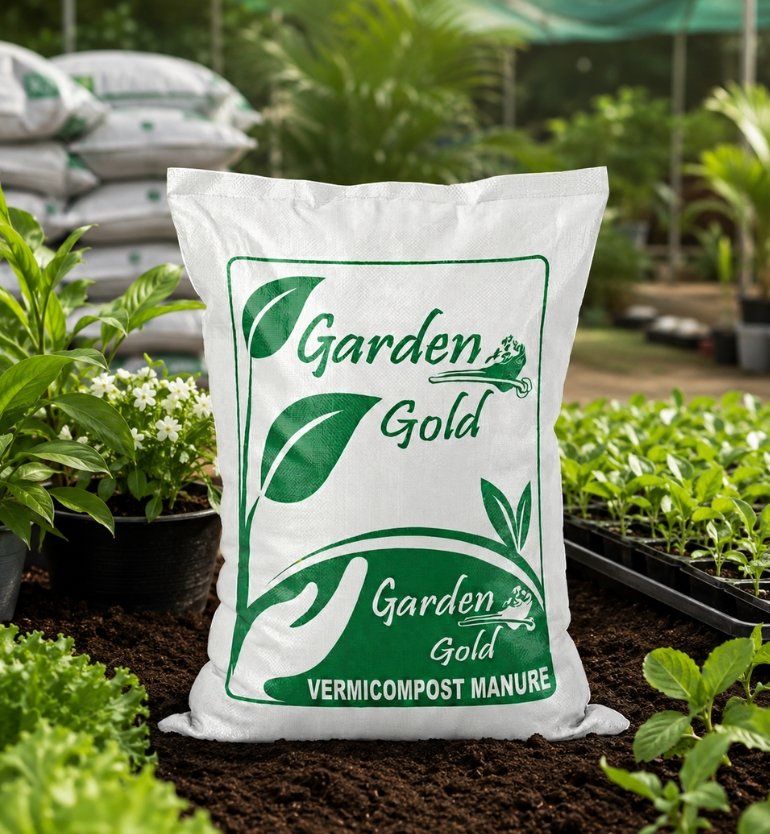
How to Choose the Right Vermicompost Supplier in Gujarat: 7 Questions to Ask Before You Buy Home / July 15, 2026 vermi_admin If you’ve searched for a vermicompost supplier in Gujarat, you’ve probably noticed something: a lot of the “leading suppliers” that show up aren’t actually based in Gujarat. Some operate out of Maharashtra or other states and ship their product across state lines to reach you. That might not sound like a big deal — until you calculate the transport cost, or until your bags arrive late during peak sowing season, or until you realize the manure has dried out or lost quality during a 500+ km journey. Before you commit to a supplier, here are seven questions worth asking. We’ll also explain why these questions matter more in the vermicompost business than in almost any other agri-input purchase. 1. Is the Supplier Actually Based in Gujarat? Vermicompost is bulky, heavy, and sold in 50 kg, 25 kg, or 5 kg bags — not a small SKU you can courier cheaply. When a supplier is based outside the state, freight charges get added to every single order, and that cost is either passed on to you or recovered by cutting corners on quality. A Gujarat-based manufacturer, by contrast, can deliver to farms, nurseries, and project sites across Anand, Ahmedabad, Vadodara, Surat, and Rajkot at a fraction of the freight cost an out-of-state supplier would charge. Shorter distance also means faster delivery — critical when you’re racing to apply manure before monsoon sowing or a transplanting window. Question to ask: “Where is your production facility located, and what will transport cost me to my site?” 2. Do You Buy Direct From the Manufacturer, or Through a Middleman? Most vermicompost in the market passes through at least one layer of trading — a distributor or reseller who buys in bulk from a manufacturer and marks up the price before it reaches you. You end up paying for an extra link in the chain without getting any extra value. Buying direct from the farm that actually produces the vermicompost means: No distributor margin added to your price No uncertainty about who is responsible if quality varies Direct access to the people who can answer questions about the product’s composition, moisture content, or application rate Fresher stock, since it isn’t sitting in a middleman’s warehouse before reaching you Question to ask: “Am I buying directly from your production unit, or from a dealer who buys from someone else?” 3. What Is Their Actual Production Capacity? A supplier’s capacity tells you two things: whether they can fulfill large or repeat orders reliably, and whether they have the scale and process control to maintain consistent quality batch after batch. A small-scale or seasonal producer may run out of stock right when you need it most, or vary in quality from one batch to the next. Question to ask: “What is your monthly production capacity, and can you guarantee supply during peak season?” 4. What Raw Material Goes Into the Compost? Not all vermicompost is created equal. Some manufacturers use mixed organic waste of inconsistent origin. Others use 100% cow dung as the base material, which tends to produce a more consistent nutrient profile and is generally preferred for both farming and garden use. Question to ask: “What is your raw material, and is it consistent across every batch?” 5. Can They Show You the Production Process? A manufacturer confident in their process should be willing to show you — through photos, videos, or a farm visit — how the compost is made, cured, and packed. This is one of the simplest ways to separate genuine producers from traders repackaging bought-in material. Question to ask: “Can I see your production site or process documentation?” 6. What Do Existing Customers Say? Testimonials from farmers, nurseries, or landscaping contractors who have used the product across multiple seasons are more reliable than marketing claims. Ask specifically about repeat usage — a one-time purchase doesn’t tell you much, but a customer who keeps reordering season after season does. Question to ask: “Can you connect me with existing customers in my district who’ve used your product for more than one season?” 7. Do They Understand Gujarat’s Soil and Crops? A supplier who works specifically within Gujarat will have practical, on-ground experience with the state’s major crops — cotton, groundnut, castor, bajra, cumin — and its soil and climate conditions, from the black cotton soils of Saurashtra to the arid stretches of Kutch. That local experience translates into better dosage guidance and application advice than a generic, one-size-fits-all recommendation from a supplier serving a dozen different states. Question to ask: “Can you advise me on dosage specific to my crop and region, or is your advice generic?” Why This Matters More Than It Seems It’s tempting to treat vermicompost as a commodity — buy whichever bag is cheapest per kg. But the real cost includes freight, middleman margins, inconsistent quality, and the yield difference between a properly cured, nutrient-rich compost and a rushed or diluted one. A locally based, direct-from-farm supplier with real production scale tends to win on all four of those factors at once, even when the sticker price per bag looks similar. How Garden Gold Answers These Questions We’re a Gujarat-based vermicompost manufacturer producing 30,000–40,000 bags (50 kg each) directly from our own facility in Mogar, Dist. Anand. There’s no distributor or middleman in our supply chain — when you order from Garden Gold, you’re buying straight from the source. That keeps transport costs lower for customers across Gujarat, keeps our stock fresh, and means the people answering your questions are the same people who manage production. If you’re evaluating suppliers for your farm, nursery, landscaping project, or institutional garden, we’re happy to walk you through our process, share batch details, and connect you with existing customers in your area. Previous Post
How Nursery Owners Can Boost Plant Survival During Monsoon
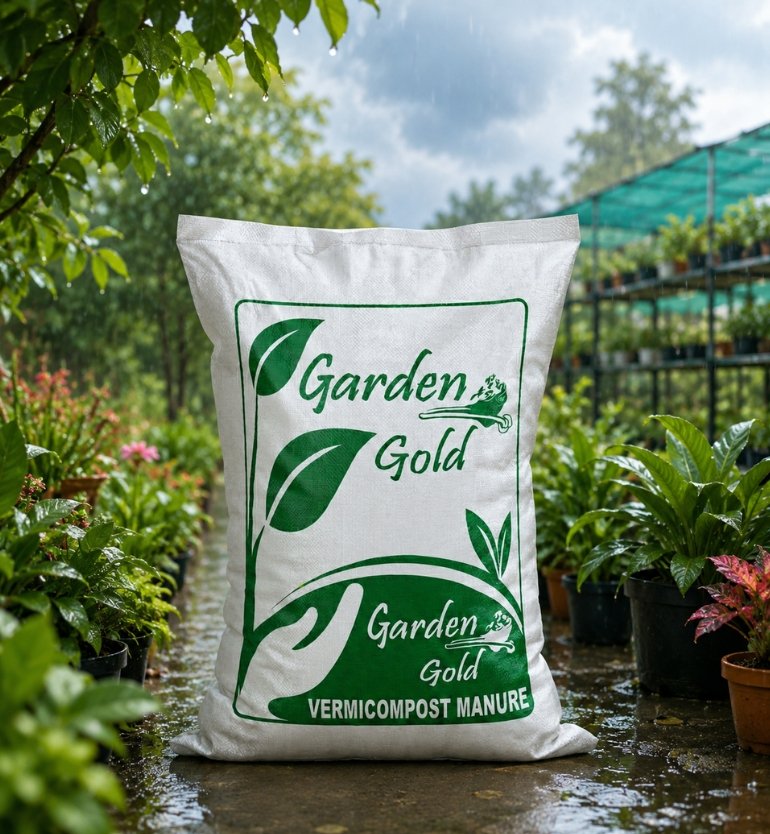
Cotton Crop Monsoon Guide: Correct Vermicompost Quantity Per Acre Home / May 29, 2026 vermi_admin Cotton is one of Gujarat’s most important cash crops, and most farmers begin cotton sowing during May–June with the arrival of the monsoon. For a healthy cotton crop, strong root development and proper early nutrition are essential. One common question many farmers ask is: How much vermicompost should be used in the cotton crop, and when should it be applied during the monsoon? This guide explains the correct quantity, application timing, and monsoon crop care practices to help farmers use vermicompost effectively. Why Proper Nutrition is Important for Cotton During Monsoon The first 30–45 days after sowing are very important for cotton crop establishment. During this stage, the crop needs: Strong root growth Healthy vegetative development Balanced soil moisture Good nutrient availability If soil nutrition is weak during this period, crop growth slows, which later affects square formation and boll development. This is why many progressive farmers use organic vermicompost as part of cotton crop nutrient management. Why Vermicompost is Useful for Cotton Crop Good-quality vermicompost improves soil structure and provides natural nutrients to the crop. It provides: Nitrogen (N) Supports healthy leaf growth and green development Phosphorus (P) Helps strong root establishment Potash (K) Supports plant strength and stress tolerance It also improves: Soil organic carbon Microbial activity Moisture retention Nutrient availability These factors help cotton plants grow stronger during monsoon conditions. Recommended Vermicompost Quantity for Cotton Per Acre Based on integrated nutrient management recommendations and practical field use: Medium Fertility Soil 800–1000 kg per acre(16–20 bags of 50 kg) Good Organic Soil 500–800 kg per acre Low Organic Carbon Soil 1000–1200 kg per acre(only when additional organic support is needed) Important:Actual quantity depends on: Soil condition Organic carbon level Previous crop residue Local agronomist’s recommendation Best Time to Apply Vermicompost for Cotton Before Sowing (Best Stage) Apply 7–10 days before sowing This allows vermicompost to mix properly into the soil and activate microbial activity. During Final Land Preparation Broadcast evenly and mix during final plowing. This ensures nutrients are available near the root zone. Optional Supplementary Application If crop growth appears weak, a light application can be given at: 25–30 days after sowing Apply near plant rows and cover lightly with soil. How to Apply Vermicompost in Cotton Field Method 1: Broadcasting Spread evenly across the field before final plowing. Best for full-field soil enrichment. Method 2: Row Application Apply along sowing rows. This improves the direct availability of nutrients near germinating roots. Method 3: Root Zone Application Apply around the plant base during the early growth stage. Useful when additional nutrition is needed. Monsoon Care Tips for Cotton Farmers Ensure Proper Drainage Cotton does not tolerate waterlogging. Remove standing water quickly. Avoid Application During Heavy Continuous Rain Excess rainfall can reduce nutrient efficiency. Apply when moderate rainfall is expected. Maintain Soil Aeration Good aeration supports healthy root growth. Monitor Crop Growth Regularly Watch for: Yellowing leaves Slow growth Poor vigor These may indicate nutrient stress. Benefits of Using Vermicompost in Cotton Crop Correct use of vermicompost can support: Better root development Improved moisture retention Healthy early growth Better soil fertility Improved microbial activity Stronger crop establishment Why Farmers Prefer Garden Gold Organic Vermicompost Garden Gold is prepared using 100% pure cow dung through a natural composting process. It offers: Fine texture Rich natural NPK Easy field application Odor-controlled processing Suitable for cotton and other major crops Final Advice for Cotton Farmers For the cotton crops during the monsoon: ✅ Apply vermicompost during final land preparation✅ Use the correct quantity as per soil condition✅ Avoid heavy rain application✅ Maintain proper drainage Using vermicompost as part of balanced nutrient management helps improve soil health and supports better cotton crop growth. For crop-specific guidance and bulk supply, contact Garden Gold Organic Vermicompost. Previous Post
Benefits of Using Cocopeat in Organic Farming and Sustainable Agriculture
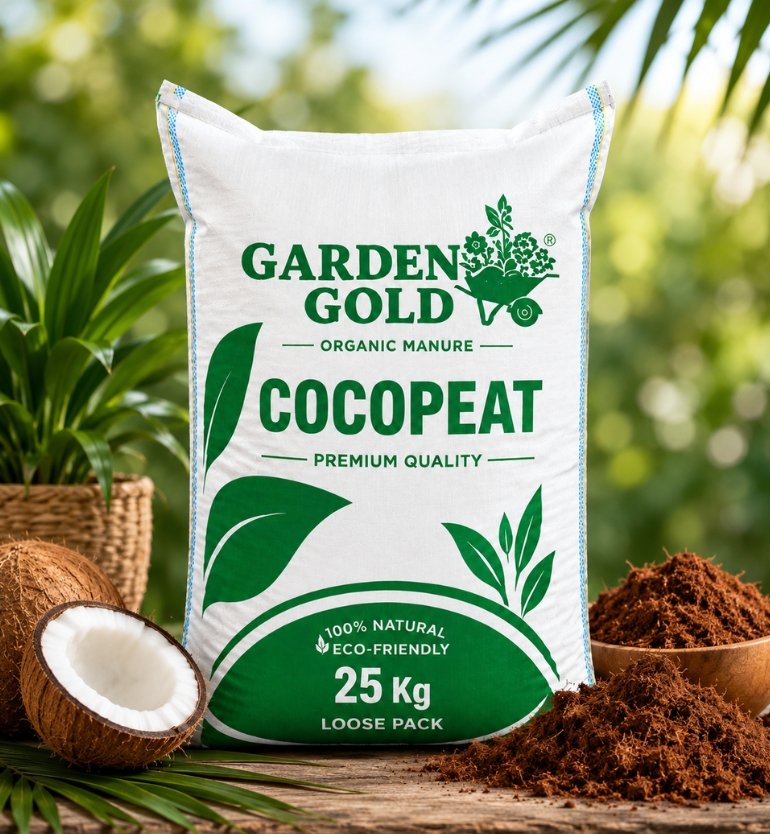
Cotton Crop Monsoon Guide: Correct Vermicompost Quantity Per Acre – Copy Home / June 30, 2026 vermi_admin Organic farming is expanding quickly across Gujarat as growers look for natural, chemical-free inputs that build soil health rather than depleting it. Cocopeat — also known as coco coir or coconut pith — has become one of the most trusted of these inputs, prized by farmers, nursery owners, greenhouse operators, and home gardeners alike for the way it improves moisture management, root growth, and overall plant vigour. Cocopeat is made from coconut husks. The fibrous husk is washed, processed, dried, and compressed into easy-to-handle blocks or sold loose in formats such as cocopeat 25 kg bags. The result is a renewable, soil-free growing medium that performs reliably across agriculture, nurseries, greenhouses, and hydroponic systems — which is why Garden Gold has expanded beyond vermicompost to now offer premium-quality cocopeat for farmers and growers across Gujarat. What Is Cocopeat and Why Does It Work So Well in Organic Systems? Cocopeat contains no synthetic chemicals — it is purely processed coconut fibre — which makes it naturally suited to organic and chemical-free growing. Its sponge-like structure does two things most regular soils struggle to do at once: it holds water efficiently while still letting air reach the root zone. Independent of brand, cocopeat is also close to pH neutral, which means it adapts easily to a wide range of crops without the heavy soil amendment that acidic or alkaline soils often demand. Key Benefits of Cocopeat for Farmers and Growers Excellent water retention. Cocopeat can hold many times its own weight in water and releases that moisture slowly to plant roots. This reduces irrigation frequency, which translates into real water and labour savings for farms managing large areas. Stronger root development. Because cocopeat stays light and porous even when moist, oxygen continues to reach the root zone. Better-aerated roots typically mean healthier, more productive plants above ground. Improved soil structure. Mixing cocopeat into heavy or compacted soil loosens it, improves drainage, and creates a more favourable root environment — a key reason cocopeat for agriculture is now used so widely as a soil amendment, not just a standalone medium. Reduced water consumption. Slow, even moisture release means less water lost to evaporation and runoff, supporting more sustainable water use on the farm. Natural and renewable. As a coconut-husk byproduct, cocopeat introduces no chemicals into the soil, making it suitable for certified organic farming and eco-conscious gardening. Reliable for seed germination. The soft, moisture-rich texture is gentle on young seedlings, which is why cocopeat for nursery plants is a go-to choice for raising healthy saplings with faster, more even germination. A Practical Mixing Example A typical vegetable nursery preparing seedling trays might combine 50% cocopeat, 25% vermicompost, and 25% soil. The cocopeat keeps the mix light and moist, the vermicompost supplies nutrients, and the soil adds structure. Seedlings raised in this blend often show stronger, more uniform growth within days compared with trays filled with plain soil — a combination widely used by nurseries across Gujarat before transplanting. Where Cocopeat for Agriculture Is Used Field and vegetable farming — as a soil conditioner that improves water-holding capacity and drainage. Greenhouse cultivation — where consistent moisture and aeration are critical to yield. Hydroponic systems — cocopeat for hydroponics works as a soilless growing medium that supports roots while nutrients are delivered through water. Nurseries and seed-starting — for consistent, healthy germination. Home and terrace gardening — cocopeat for gardening is popular in balconies, terraces, and kitchen gardens where space is limited. Cocopeat vs. Soil: What Changes for Growers Traditional soil varies widely in texture, drainage, and nutrient content from one field to the next. Cocopeat offers a far more consistent starting point: predictable water retention, reliable aeration, and a near-neutral pH that suits most crops without major amendment. It will not replace nutrient-rich inputs like vermicompost, but used alongside them, it gives growers more control over root-zone conditions — something especially valuable in nurseries, greenhouses, and hydroponic setups where consistency matters most. Choosing a Reliable Cocopeat Supplier in Gujarat Quality varies significantly between sources, so working with a dependable cocopeat supplier in Gujarat matters. A trustworthy supplier should offer consistent texture, properly processed fibre, low salinity, and reliable packaging such as cocopeat 25 kg bags for easy handling and storage. For farms and nurseries needing larger volumes, partnering with a bulk cocopeat supplier that can deliver consistently across Gujarat saves both time and transport cost. Garden Gold now curates and supplies premium-grade cocopeat alongside its established organic vermicompost range, giving customers a single, dependable source for both products. Final Thoughts Cocopeat offers a simple, natural way to improve soil health, conserve water, and support stronger plant growth — from small home gardens to large-scale greenhouse operations. Paired with organic inputs like vermicompost, the results are even better, giving growers a complete, chemical-free foundation for healthier crops. Ready to improve your soil and boost your yields naturally? Get in touch with Garden Gold, your trusted source for cocopeat in Gujarat, and place your bulk order for premium-quality 25 kg cocopeat, delivered reliably for your farm, nursery, or greenhouse. Benefits of Using Vermicompost in Cotton Crop Correct use of vermicompost can support: Better root development Improved moisture retention Healthy early growth Better soil fertility Improved microbial activity Stronger crop establishment Why Farmers Prefer Garden Gold Organic Vermicompost Garden Gold is prepared using 100% pure cow dung through a natural composting process. It offers: Fine texture Rich natural NPK Easy field application Odor-controlled processing Suitable for cotton and other major crops Final Advice for Cotton Farmers For the cotton crops during the monsoon: ✅ Apply vermicompost during final land preparation✅ Use the correct quantity as per soil condition✅ Avoid heavy rain application✅ Maintain proper drainage Using vermicompost as part of balanced nutrient management helps improve soil health and supports better cotton crop growth. For crop-specific guidance and bulk supply, contact Garden Gold Organic Vermicompost. Previous Post
