
How Nursery Owners Can Boost Plant Survival During Monsoon
Monsoon brings relief after the summer heat, but it also brings new challenges for nursery owners. Heavy rain, waterlogging, and humidity can damage young plants quickly. Seedlings that survive summer heat sometimes struggle the most during this wet season.
Nursery owners who plan ahead can protect their plants and keep survival rates high. With the right fertilizer, drainage, and care, monsoon can actually become a season of strong, healthy growth instead of plant loss.
Why Monsoon Is Risky for Nursery Plants
Excess water is the biggest threat during monsoon. Waterlogged soil cuts off oxygen to the roots. This leads to root rot, yellow leaves, and weak stems. Humidity also encourages fungal disease, which spreads fast in crowded nursery beds.
Young saplings and freshly potted plants are especially vulnerable. Their root systems are not strong enough yet to handle constant moisture without proper support.
Steps to Protect Nursery Plants in Monsoon
Improve drainage first Raised beds and pots with drainage holes allow excess water to escape. Standing water around roots should never be allowed to collect for long.
Choose the right potting mix A mix that holds some moisture but still drains well works best. Combining soil with organic matter improves both structure and air flow around roots.
Use the best fertilizer for nursery plants Chemical fertilizers can stress plants further during wet weather. Organic options are gentler and support steady growth. This is where the benefits of vermicompost become clear. Vermicompost releases nutrients slowly, improves soil structure, and boosts beneficial microbial activity in the soil. It is gentle on young roots, which makes it suitable even for delicate seedlings facing monsoon stress.
Watch for fungal disease early Check leaves and stems regularly. Remove any plant showing early signs of rot or fungal spots before it spreads to others nearby.
Space plants properly Crowded nursery beds trap moisture and reduce air circulation. Leaving enough space between pots helps leaves dry faster after rain.
A Practical Example
A small nursery in Gujarat once lost nearly a third of its mango saplings during a heavy monsoon season. The cause was simple. Pots were placed too close together, and the soil mix held too much water. The following year, the owner switched to a mix enriched with vermicompost and raised the pots slightly off the ground for better drainage. Plant spacing was also increased. By the end of that monsoon, survival rates improved sharply, and the saplings looked stronger and greener than before.
This example shows how small changes, paired with the right organic fertilizer, can make a big difference during the wet season.

Why Vermicompost Works Well in Monsoon
Vermicompost is made from organic matter broken down by earthworms. It is rich in nutrients yet gentle enough not to burn young roots. Unlike many chemical fertilizers, it does not wash away easily during heavy rain, since it improves the soil structure that holds it in place.
For nursery owners who need a steady supply, ordering vermicompost online for nursery use has become easier. This allows growers to plan ahead before monsoon arrives, rather than searching for supply once the rains have already started.
Planning Ahead for a Healthier Monsoon Season
Nursery owners do not need expensive equipment to protect their plants. Good drainage, proper spacing, and the right organic fertilizer go a long way. Vermicompost fits naturally into this plan, supporting root health and reducing stress on plants during the wettest months of the year.
With a little preparation, nurseries can turn monsoon from a risky season into one of steady, healthy growth.
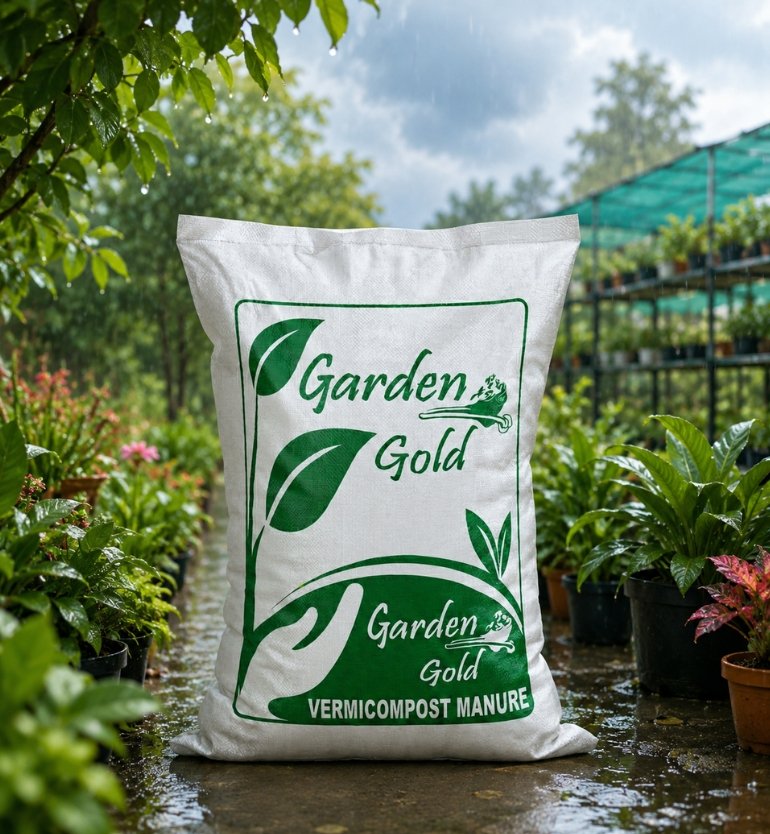
Want healthier nursery plants this monsoon? Order Garden Gold organic vermicompost online today and give your nursery the nutrient support it needs to survive and thrive through the rainy season.
Frequently Asked Questions
Heavy rain causes waterlogging, which reduces oxygen to roots and encourages fungal disease, weakening young plants.
Organic options like vermicompost work well, since they release nutrients slowly and do not wash away easily in heavy rain.
Vermicompost improves soil structure, boosts microbial activity, and provides gentle, steady nutrition without stressing young roots.
Improve drainage, avoid overwatering, and use a potting mix that holds moisture without staying waterlogged.
Yes. Many growers now order vermicompost online for nursery use, making it easier to plan supply ahead of the monsoon season.
