
Benefits of Using Cocopeat in Organic Farming and Sustainable Agriculture
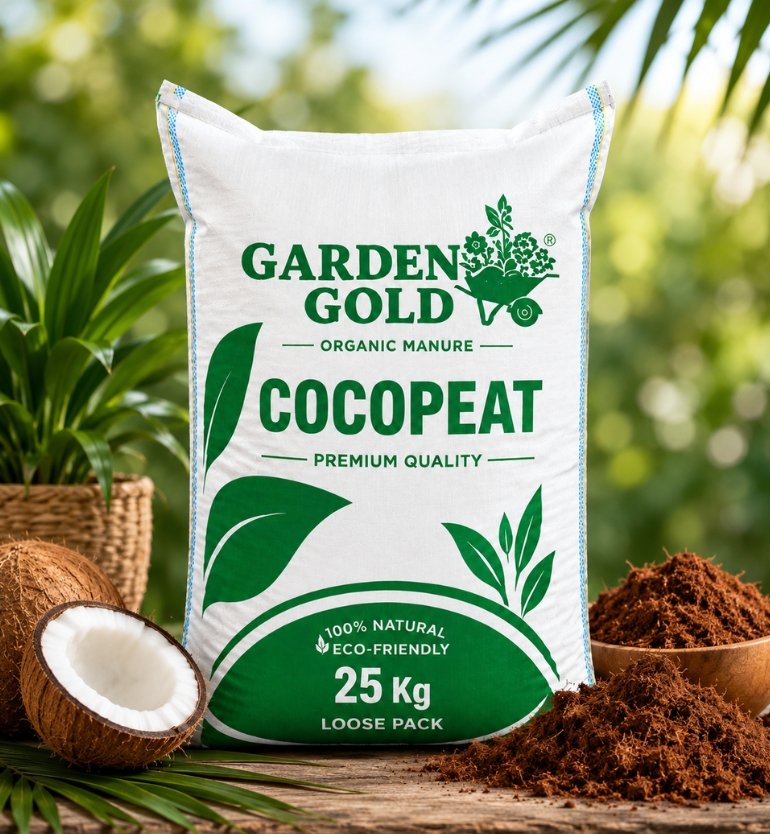
Organic farming is expanding quickly across Gujarat as growers look for natural, chemical-free inputs that build soil health rather than depleting it. Cocopeat — also known as coco coir or coconut pith — has become one of the most trusted of these inputs, prized by farmers, nursery owners, greenhouse operators, and home gardeners alike for the way it improves moisture management, root growth, and overall plant vigour.
Cocopeat is made from coconut husks. The fibrous husk is washed, processed, dried, and compressed into easy-to-handle blocks or sold loose in formats such as cocopeat 25 kg bags. The result is a renewable, soil-free growing medium that performs reliably across agriculture, nurseries, greenhouses, and hydroponic systems — which is why Garden Gold has expanded beyond vermicompost to now offer premium-quality cocopeat for farmers and growers across Gujarat.
What Is Cocopeat and Why Does It Work So Well in Organic Systems?
Cocopeat contains no synthetic chemicals — it is purely processed coconut fibre — which makes it naturally suited to organic and chemical-free growing. Its sponge-like structure does two things most regular soils struggle to do at once: it holds water efficiently while still letting air reach the root zone. Independent of brand, cocopeat is also close to pH neutral, which means it adapts easily to a wide range of crops without the heavy soil amendment that acidic or alkaline soils often demand.
Key Benefits of Cocopeat for Farmers and Growers
Excellent water retention. Cocopeat can hold many times its own weight in water and releases that moisture slowly to plant roots. This reduces irrigation frequency, which translates into real water and labour savings for farms managing large areas.
Stronger root development. Because cocopeat stays light and porous even when moist, oxygen continues to reach the root zone. Better-aerated roots typically mean healthier, more productive plants above ground.
Improved soil structure. Mixing cocopeat into heavy or compacted soil loosens it, improves drainage, and creates a more favourable root environment — a key reason cocopeat for agriculture is now used so widely as a soil amendment, not just a standalone medium.
Reduced water consumption. Slow, even moisture release means less water lost to evaporation and runoff, supporting more sustainable water use on the farm.
Natural and renewable. As a coconut-husk byproduct, cocopeat introduces no chemicals into the soil, making it suitable for certified organic farming and eco-conscious gardening.
Reliable for seed germination. The soft, moisture-rich texture is gentle on young seedlings, which is why cocopeat for nursery plants is a go-to choice for raising healthy saplings with faster, more even germination.
A Practical Mixing Example
A typical vegetable nursery preparing seedling trays might combine 50% cocopeat, 25% vermicompost, and 25% soil. The cocopeat keeps the mix light and moist, the vermicompost supplies nutrients, and the soil adds structure. Seedlings raised in this blend often show stronger, more uniform growth within days compared with trays filled with plain soil — a combination widely used by nurseries across Gujarat before transplanting.
Where Cocopeat for Agriculture Is Used
- Field and vegetable farming — as a soil conditioner that improves water-holding capacity and drainage.
- Greenhouse cultivation — where consistent moisture and aeration are critical to yield.
- Hydroponic systems — cocopeat for hydroponics works as a soilless growing medium that supports roots while nutrients are delivered through water.
- Nurseries and seed-starting — for consistent, healthy germination.
- Home and terrace gardening — cocopeat for gardening is popular in balconies, terraces, and kitchen gardens where space is limited.
Cocopeat vs. Soil: What Changes for Growers
Traditional soil varies widely in texture, drainage, and nutrient content from one field to the next. Cocopeat offers a far more consistent starting point: predictable water retention, reliable aeration, and a near-neutral pH that suits most crops without major amendment. It will not replace nutrient-rich inputs like vermicompost, but used alongside them, it gives growers more control over root-zone conditions — something especially valuable in nurseries, greenhouses, and hydroponic setups where consistency matters most.
Choosing a Reliable Cocopeat Supplier in Gujarat
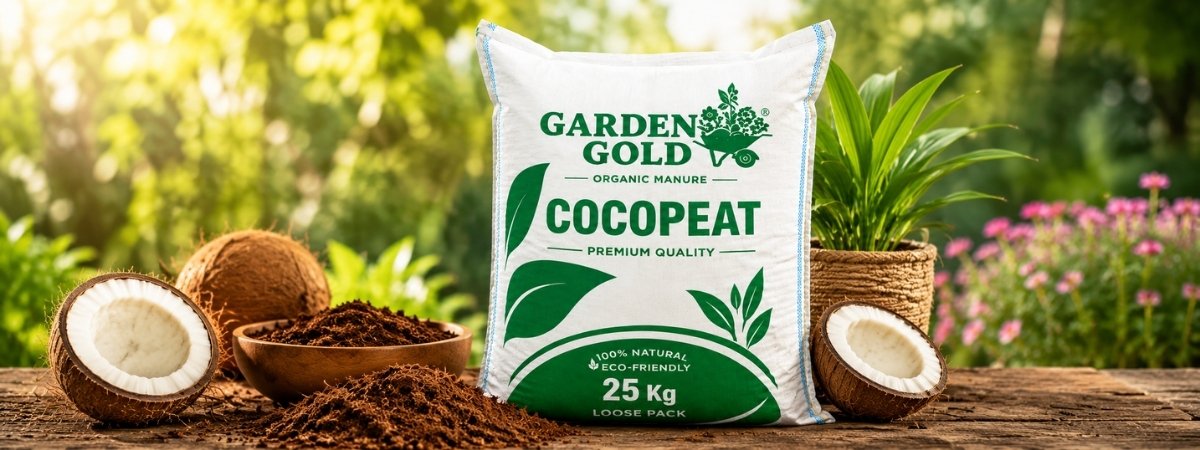
Quality varies significantly between sources, so working with a dependable cocopeat supplier in Gujarat matters. A trustworthy supplier should offer consistent texture, properly processed fibre, low salinity, and reliable packaging such as cocopeat 25 kg bags for easy handling and storage.
For farms and nurseries needing larger volumes, partnering with a bulk cocopeat supplier that can deliver consistently across Gujarat saves both time and transport cost. Garden Gold now curates and supplies premium-grade cocopeat alongside its established organic vermicompost range, giving customers a single, dependable source for both products.
Final Thoughts
Cocopeat offers a simple, natural way to improve soil health, conserve water, and support stronger plant growth — from small home gardens to large-scale greenhouse operations. Paired with organic inputs like vermicompost, the results are even better, giving growers a complete, chemical-free foundation for healthier crops.
Ready to improve your soil and boost your yields naturally? Get in touch with Garden Gold, your trusted source for cocopeat in Gujarat, and place your bulk order for premium-quality 25 kg cocopeat, delivered reliably for your farm, nursery, or greenhouse.
Frequently Asked Questions
Cocopeat is a natural growing medium made from processed coconut husk fibres. The fibre is washed, dried, and packed for use in farming, nurseries, greenhouses, and home gardening.
Yes. Cocopeat contains no synthetic chemicals and is fully natural, making it suitable for organic and sustainable agriculture practices.
Cocopeat can be used alone for seed germination and hydroponics. For general farming and gardening, mixing it with soil and vermicompost usually gives the best results.
Cocopeat retains moisture efficiently and releases it slowly, which reduces how often plants need watering and cuts down on water lost to evaporation or runoff.
Cocopeat offers more consistent water retention, aeration, and pH than most regular soils. It works best as a soil conditioner or standalone medium rather than a complete replacement for nutrient-rich inputs like vermicompost.
Bulk and wholesale cocopeat is available from established suppliers in Gujarat, typically packed in convenient 25 kg bags for farms, nurseries, and greenhouses. Garden Gold supplies premium-quality cocopeat 25 kg bags across the region.
