
Vermicompost Manufacturer vs Trader: Why Buying Direct Matters
Government Subsidy Schemes for Organic Manure & Vermicompost in Gujarat Home / August 6, 2026 vermi_admin Many farmers in Gujarat are aware that organic inputs like vermicompost improve soil health, but fewer are aware that several government schemes can directly reduce the cost of switching to organic farming practices. Whether you’re a smallholder farmer, part of a cooperative, or running a Farmer Producer Organization, understanding what support is available can make the transition to organic inputs significantly more affordable. This guide breaks down the major schemes relevant to vermicompost and organic manure use in Gujarat, and how to access them. Note: Scheme details, subsidy percentages, and application processes are revised periodically by central and state agriculture departments. Always confirm current terms with your local Krishi Vigyan Kendra (KVK) or agriculture office before applying. Why This Matters for Vermicompost Adoption Vermicompost typically costs more upfront per bag than chemical fertilizer, even though it delivers better long-term soil health and reduces input costs over time. Subsidy schemes are designed to offset that upfront cost gap, making organic inputs more accessible, especially for smallholder and marginal farmers who are price-sensitive in the short term. Key Schemes Farmers Should Know About Paramparagat Krishi Vikas Yojana (PKVY) A central government scheme promoting organic farming through cluster-based approaches, where farmer groups are supported in adopting organic inputs, including vermicompost, over a multi-year transition period. Soil Health Card Scheme While not a direct subsidy, the Soil Health Card scheme provides farmers with soil test results and specific recommendations — often including organic input recommendations like vermicompost dosage — that can help justify and plan organic input purchases more precisely, reducing waste and over-application. National Mission for Sustainable Agriculture (NMSA) This mission supports a broader shift toward sustainable and climate-resilient farming practices, with components that support organic input adoption, including composting and vermicomposting infrastructure in some cases. Gujarat State Organic Farming Schemes Gujarat’s agriculture department has periodically run state-level schemes supporting organic certification, organic input subsidies, and support for vermicompost units, often administered through district agriculture offices and KVKs. These schemes and their terms change year to year, so checking with your local agriculture office for the current year’s program is essential. Mission Organic Value Chain Development Particularly relevant for farmers in hill and tribal areas of Gujarat, this mission supports the full organic value chain, including input subsidies, certification support, and market linkage for organic produce grown with inputs like vermicompost. How to Access These Schemes Visit your local Krishi Vigyan Kendra (KVK) or district agriculture office — they maintain the most current information on active schemes and application windows. Check eligibility criteria carefully — many schemes prioritize smallholder farmers, FPOs, or specific districts/clusters. Keep your Soil Health Card updated — several schemes reference soil health data when approving organic input support. Apply through your FPO or cooperative if you’re a member — group applications are often processed more efficiently and sometimes carry additional collective benefits. Retain purchase invoices from your vermicompost supplier — most subsidy reimbursement processes require documented proof of purchase. Is vermicompost itself directly subsidized in Gujarat? Subsidy availability and percentage vary by scheme, year, and district. Some schemes subsidize organic inputs directly, while others support the broader transition to organic farming, which indirectly reduces the cost burden of inputs like vermicompost. Check with your local KVK or agriculture office for current-year specifics. Do I need to be a certified organic farmer to access these schemes? Not always. Some schemes are designed specifically to help farmers transition toward organic certification, so prior certification isn’t usually required to begin participating. Can Farmer Producer Organizations (FPOs) apply on behalf of multiple farmers? Yes, many schemes are structured around cluster or group-based applications through FPOs and cooperatives, which can simplify the process for individual farmer members. Where can I buy vermicompost that qualifies for subsidy documentation? Most schemes require a valid purchase invoice rather than a specific supplier certification, but it’s worth confirming with your agriculture office. Garden Gold provides proper invoices and documentation for all bulk and retail purchases, which farmers have used for their own scheme applications. We’re Here to Support Your Transition Switching to organic inputs is easier when you have a reliable, consistent supplier alongside the right scheme support. Garden Gold supplies vermicompost directly from our facility in Mogar, Dist. Anand, with proper invoicing for farmers applying through government schemes or FPO programs. Previous Post
Best Vermicompost Supplier Near You in Gujarat: Anand, Ahmedabad, Vadodara, Surat & Rajkot
Government Subsidy Schemes for Organic Manure & Vermicompost in Gujarat Home / August 6, 2026 vermi_admin Many farmers in Gujarat are aware that organic inputs like vermicompost improve soil health, but fewer are aware that several government schemes can directly reduce the cost of switching to organic farming practices. Whether you’re a smallholder farmer, part of a cooperative, or running a Farmer Producer Organization, understanding what support is available can make the transition to organic inputs significantly more affordable. This guide breaks down the major schemes relevant to vermicompost and organic manure use in Gujarat, and how to access them. Note: Scheme details, subsidy percentages, and application processes are revised periodically by central and state agriculture departments. Always confirm current terms with your local Krishi Vigyan Kendra (KVK) or agriculture office before applying. Why This Matters for Vermicompost Adoption Vermicompost typically costs more upfront per bag than chemical fertilizer, even though it delivers better long-term soil health and reduces input costs over time. Subsidy schemes are designed to offset that upfront cost gap, making organic inputs more accessible, especially for smallholder and marginal farmers who are price-sensitive in the short term. Key Schemes Farmers Should Know About Paramparagat Krishi Vikas Yojana (PKVY) A central government scheme promoting organic farming through cluster-based approaches, where farmer groups are supported in adopting organic inputs, including vermicompost, over a multi-year transition period. Soil Health Card Scheme While not a direct subsidy, the Soil Health Card scheme provides farmers with soil test results and specific recommendations — often including organic input recommendations like vermicompost dosage — that can help justify and plan organic input purchases more precisely, reducing waste and over-application. National Mission for Sustainable Agriculture (NMSA) This mission supports a broader shift toward sustainable and climate-resilient farming practices, with components that support organic input adoption, including composting and vermicomposting infrastructure in some cases. Gujarat State Organic Farming Schemes Gujarat’s agriculture department has periodically run state-level schemes supporting organic certification, organic input subsidies, and support for vermicompost units, often administered through district agriculture offices and KVKs. These schemes and their terms change year to year, so checking with your local agriculture office for the current year’s program is essential. Mission Organic Value Chain Development Particularly relevant for farmers in hill and tribal areas of Gujarat, this mission supports the full organic value chain, including input subsidies, certification support, and market linkage for organic produce grown with inputs like vermicompost. How to Access These Schemes Visit your local Krishi Vigyan Kendra (KVK) or district agriculture office — they maintain the most current information on active schemes and application windows. Check eligibility criteria carefully — many schemes prioritize smallholder farmers, FPOs, or specific districts/clusters. Keep your Soil Health Card updated — several schemes reference soil health data when approving organic input support. Apply through your FPO or cooperative if you’re a member — group applications are often processed more efficiently and sometimes carry additional collective benefits. Retain purchase invoices from your vermicompost supplier — most subsidy reimbursement processes require documented proof of purchase. Is vermicompost itself directly subsidized in Gujarat? Subsidy availability and percentage vary by scheme, year, and district. Some schemes subsidize organic inputs directly, while others support the broader transition to organic farming, which indirectly reduces the cost burden of inputs like vermicompost. Check with your local KVK or agriculture office for current-year specifics. Do I need to be a certified organic farmer to access these schemes? Not always. Some schemes are designed specifically to help farmers transition toward organic certification, so prior certification isn’t usually required to begin participating. Can Farmer Producer Organizations (FPOs) apply on behalf of multiple farmers? Yes, many schemes are structured around cluster or group-based applications through FPOs and cooperatives, which can simplify the process for individual farmer members. Where can I buy vermicompost that qualifies for subsidy documentation? Most schemes require a valid purchase invoice rather than a specific supplier certification, but it’s worth confirming with your agriculture office. Garden Gold provides proper invoices and documentation for all bulk and retail purchases, which farmers have used for their own scheme applications. We’re Here to Support Your Transition Switching to organic inputs is easier when you have a reliable, consistent supplier alongside the right scheme support. Garden Gold supplies vermicompost directly from our facility in Mogar, Dist. Anand, with proper invoicing for farmers applying through government schemes or FPO programs. Previous Post
Government Subsidy Schemes for Organic Manure & Vermicompost in Gujarat
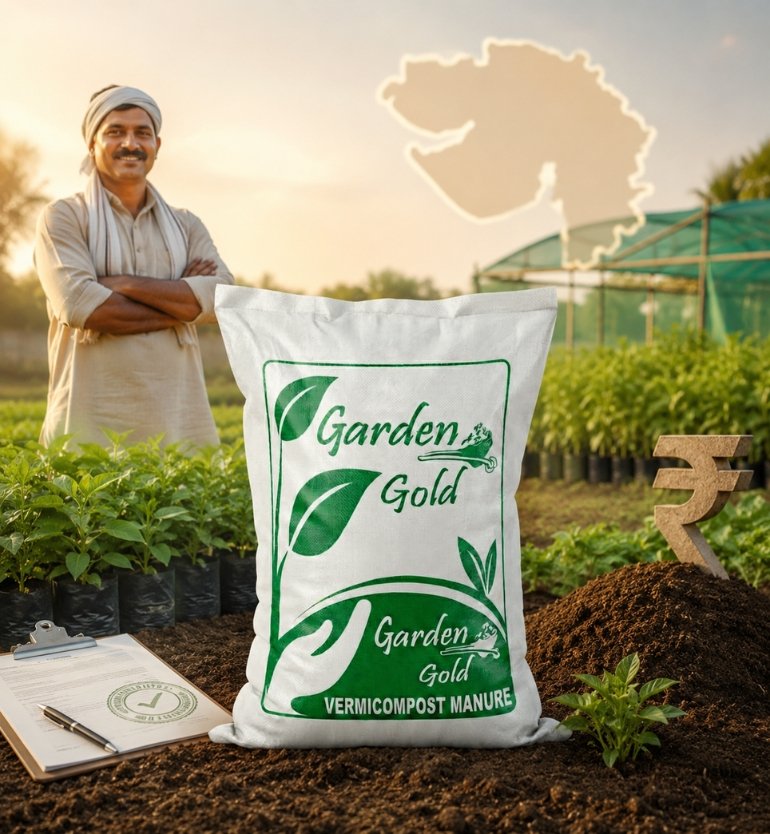
Government Subsidy Schemes for Organic Manure & Vermicompost in Gujarat Home / August 6, 2026 vermi_admin Many farmers in Gujarat are aware that organic inputs like vermicompost improve soil health, but fewer are aware that several government schemes can directly reduce the cost of switching to organic farming practices. Whether you’re a smallholder farmer, part of a cooperative, or running a Farmer Producer Organization, understanding what support is available can make the transition to organic inputs significantly more affordable. This guide breaks down the major schemes relevant to vermicompost and organic manure use in Gujarat, and how to access them. Note: Scheme details, subsidy percentages, and application processes are revised periodically by central and state agriculture departments. Always confirm current terms with your local Krishi Vigyan Kendra (KVK) or agriculture office before applying. Why This Matters for Vermicompost Adoption Vermicompost typically costs more upfront per bag than chemical fertilizer, even though it delivers better long-term soil health and reduces input costs over time. Subsidy schemes are designed to offset that upfront cost gap, making organic inputs more accessible, especially for smallholder and marginal farmers who are price-sensitive in the short term. Key Schemes Farmers Should Know About Paramparagat Krishi Vikas Yojana (PKVY) A central government scheme promoting organic farming through cluster-based approaches, where farmer groups are supported in adopting organic inputs, including vermicompost, over a multi-year transition period. Soil Health Card Scheme While not a direct subsidy, the Soil Health Card scheme provides farmers with soil test results and specific recommendations — often including organic input recommendations like vermicompost dosage — that can help justify and plan organic input purchases more precisely, reducing waste and over-application. National Mission for Sustainable Agriculture (NMSA) This mission supports a broader shift toward sustainable and climate-resilient farming practices, with components that support organic input adoption, including composting and vermicomposting infrastructure in some cases. Gujarat State Organic Farming Schemes Gujarat’s agriculture department has periodically run state-level schemes supporting organic certification, organic input subsidies, and support for vermicompost units, often administered through district agriculture offices and KVKs. These schemes and their terms change year to year, so checking with your local agriculture office for the current year’s program is essential. Mission Organic Value Chain Development Particularly relevant for farmers in hill and tribal areas of Gujarat, this mission supports the full organic value chain, including input subsidies, certification support, and market linkage for organic produce grown with inputs like vermicompost. How to Access These Schemes Visit your local Krishi Vigyan Kendra (KVK) or district agriculture office — they maintain the most current information on active schemes and application windows. Check eligibility criteria carefully — many schemes prioritize smallholder farmers, FPOs, or specific districts/clusters. Keep your Soil Health Card updated — several schemes reference soil health data when approving organic input support. Apply through your FPO or cooperative if you’re a member — group applications are often processed more efficiently and sometimes carry additional collective benefits. Retain purchase invoices from your vermicompost supplier — most subsidy reimbursement processes require documented proof of purchase. Is vermicompost itself directly subsidized in Gujarat? Subsidy availability and percentage vary by scheme, year, and district. Some schemes subsidize organic inputs directly, while others support the broader transition to organic farming, which indirectly reduces the cost burden of inputs like vermicompost. Check with your local KVK or agriculture office for current-year specifics. Do I need to be a certified organic farmer to access these schemes? Not always. Some schemes are designed specifically to help farmers transition toward organic certification, so prior certification isn’t usually required to begin participating. Can Farmer Producer Organizations (FPOs) apply on behalf of multiple farmers? Yes, many schemes are structured around cluster or group-based applications through FPOs and cooperatives, which can simplify the process for individual farmer members. Where can I buy vermicompost that qualifies for subsidy documentation? Most schemes require a valid purchase invoice rather than a specific supplier certification, but it’s worth confirming with your agriculture office. Garden Gold provides proper invoices and documentation for all bulk and retail purchases, which farmers have used for their own scheme applications. We’re Here to Support Your Transition Switching to organic inputs is easier when you have a reliable, consistent supplier alongside the right scheme support. Garden Gold supplies vermicompost directly from our facility in Mogar, Dist. Anand, with proper invoicing for farmers applying through government schemes or FPO programs. Previous Post
Best Potting Mix Ratio Using Vermicompost & Cocopeat for Nurseries
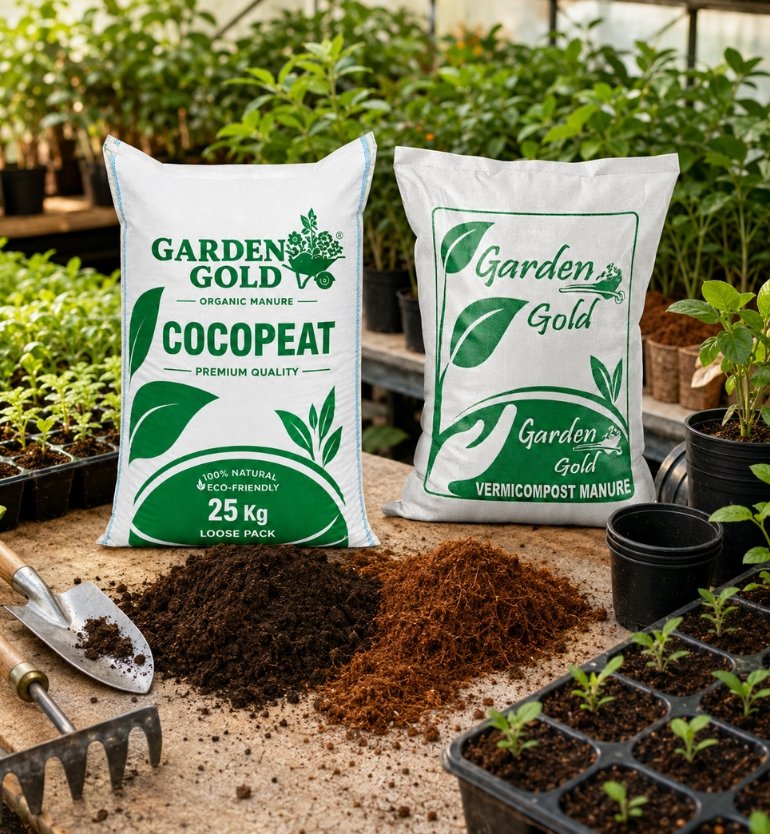
How to Identify Fake or Adulterated Vermicompost Before You Buy – Copy Home / August 6, 2026 vermi_admin Ask any experienced nursery owner what makes the difference between a sapling that struggles and one that thrives, and most will point to the same thing: what’s in the pot. Plain garden soil alone is often too dense, drains poorly, and lacks the nutrients a young root system needs to establish quickly. That’s why most professional nurseries don’t pot in soil alone – they use a blended mix, and vermicompost combined with cocopeat is one of the most reliable combinations for Gujarat’s climate and commonly grown nursery stock. This guide covers the ratios, the reasoning behind them, and how to adjust for different plant types. Why Vermicompost + Cocopeat Works Better Than Soil Alone Vermicompost supplies a steady, slow-release source of nutrients and beneficial microbes that support root development without the risk of burning young roots the way chemical fertilizers can. Cocopeat is lightweight, holds moisture exceptionally well, and creates the loose, well-aerated structure that root systems need to spread easily — something dense garden soil often can’t provide, especially in nursery containers and poly bags. Together, they create a mix that retains moisture, drains excess water, stays light enough for easy transport and transplanting, and feeds the plant gradually. Recommended Vermicompost to Cocopeat Ratio For most general-purpose nursery potting needs: General seedlings and saplings: 1 part vermicompost : 2 parts cocopeat : 1 part garden soil (or sand for better drainage) Flowering and ornamental plants: 1 part vermicompost : 1 part cocopeat : 1 part soil — slightly richer mix for plants with higher nutrient demand Fruit tree saplings (mango, lemon, pomegranate): 1 part vermicompost : 1 part cocopeat : 2 parts soil — more structural soil for plants that will stay in larger containers longer Delicate or sensitive seedlings (vegetables, herbs): 1 part vermicompost : 3 parts cocopeat — a lighter, gentler mix to avoid overwhelming small root systems These ratios are a starting point — nurseries dealing with specific crops in volume may want to test and adjust slightly based on results over a season. Step-by-Step: Preparing the Mix Moisten the cocopeat block and break it apart fully before mixing (dry cocopeat is hard to blend evenly). Combine vermicompost and cocopeat thoroughly so nutrients are distributed evenly throughout the mix. Add soil or sand if your ratio calls for it, mixing until the texture is uniform – not clumpy, not too loose. Fill trays or poly bags loosely; avoid compacting the mix too tightly, which restricts root expansion. Water lightly after filling to settle the mix before sowing seeds or transplanting cuttings. Common Mistakes Nurseries Should Avoid Using too much vermicompost relative to cocopeat — this can make the mix too dense and reduce drainage, increasing root rot risk in over-watered conditions. Skipping the moistening step for cocopeat — dry cocopeat blocks don’t blend evenly and leave dry pockets in the mix. Reusing old potting mix without refreshing it — nutrients deplete over a growing cycle; topping up with fresh vermicompost between batches keeps quality consistent. Buying inconsistent-quality vermicompost — a mix is only as good as its weakest ingredient; inconsistent vermicompost batches lead to inconsistent seedling results. Can I use vermicompost and cocopeat without any soil at all? Yes, for many nursery applications, a soil-less mix of vermicompost and cocopeat works well, especially for seed germination trays. Soil is typically added for saplings that will stay potted longer and need more structural support. How often should nursery potting mix be refreshed with vermicompost? For saplings kept in containers for several months, top-dressing with a small amount of fresh vermicompost every 6-8 weeks helps maintain nutrient levels as the original mix depletes. Is cocopeat alone enough, or is vermicompost necessary? Cocopeat alone provides almost no nutrients — it’s primarily a structural and moisture-retention medium. Vermicompost is what actually feeds the plant, so the combination outperforms either ingredient used alone. Where can nurseries buy vermicompost and cocopeat in bulk in Gujarat? Garden Gold supplies both directly from our facility in Mogar, Dist. Anand, in bulk quantities suited to nursery-scale demand, with no distributor markup. Source Both Ingredients From One Reliable Supplier Nurseries that source vermicompost and cocopeat from the same consistent manufacturer tend to see more predictable results across batches, since both inputs are quality-controlled together. Garden Gold supplies both directly from our own facility, helping nurseries across Gujarat maintain a reliable potting mix season after season. Previous Post
Benefits of Using Cocopeat in Organic Farming and Sustainable Agriculture
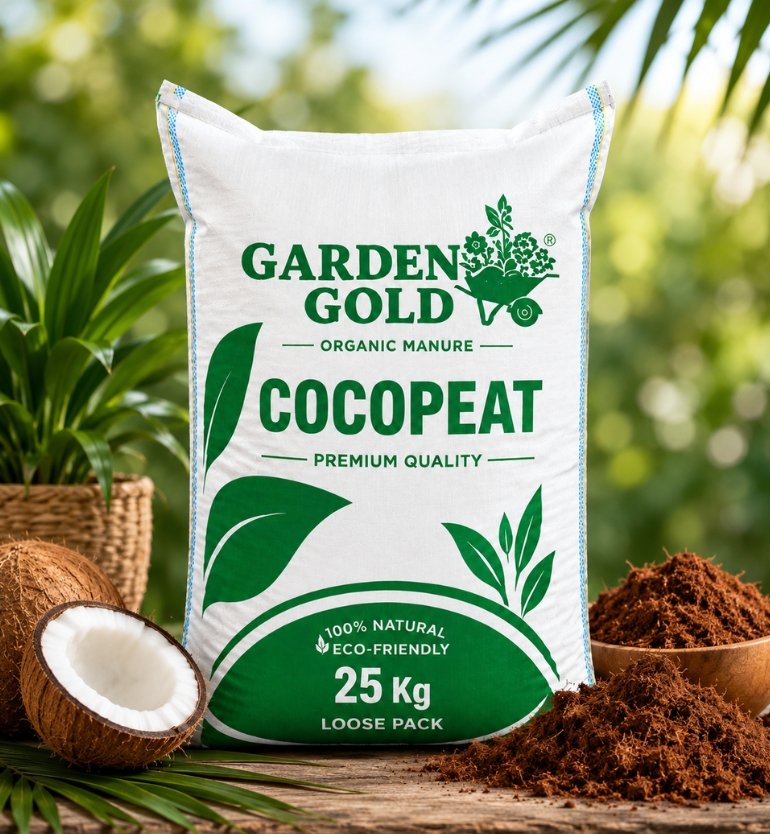
Cotton Crop Monsoon Guide: Correct Vermicompost Quantity Per Acre – Copy Home / June 30, 2026 vermi_admin Organic farming is expanding quickly across Gujarat as growers look for natural, chemical-free inputs that build soil health rather than depleting it. Cocopeat — also known as coco coir or coconut pith — has become one of the most trusted of these inputs, prized by farmers, nursery owners, greenhouse operators, and home gardeners alike for the way it improves moisture management, root growth, and overall plant vigour. Cocopeat is made from coconut husks. The fibrous husk is washed, processed, dried, and compressed into easy-to-handle blocks or sold loose in formats such as cocopeat 25 kg bags. The result is a renewable, soil-free growing medium that performs reliably across agriculture, nurseries, greenhouses, and hydroponic systems — which is why Garden Gold has expanded beyond vermicompost to now offer premium-quality cocopeat for farmers and growers across Gujarat. What Is Cocopeat and Why Does It Work So Well in Organic Systems? Cocopeat contains no synthetic chemicals — it is purely processed coconut fibre — which makes it naturally suited to organic and chemical-free growing. Its sponge-like structure does two things most regular soils struggle to do at once: it holds water efficiently while still letting air reach the root zone. Independent of brand, cocopeat is also close to pH neutral, which means it adapts easily to a wide range of crops without the heavy soil amendment that acidic or alkaline soils often demand. Key Benefits of Cocopeat for Farmers and Growers Excellent water retention. Cocopeat can hold many times its own weight in water and releases that moisture slowly to plant roots. This reduces irrigation frequency, which translates into real water and labour savings for farms managing large areas. Stronger root development. Because cocopeat stays light and porous even when moist, oxygen continues to reach the root zone. Better-aerated roots typically mean healthier, more productive plants above ground. Improved soil structure. Mixing cocopeat into heavy or compacted soil loosens it, improves drainage, and creates a more favourable root environment — a key reason cocopeat for agriculture is now used so widely as a soil amendment, not just a standalone medium. Reduced water consumption. Slow, even moisture release means less water lost to evaporation and runoff, supporting more sustainable water use on the farm. Natural and renewable. As a coconut-husk byproduct, cocopeat introduces no chemicals into the soil, making it suitable for certified organic farming and eco-conscious gardening. Reliable for seed germination. The soft, moisture-rich texture is gentle on young seedlings, which is why cocopeat for nursery plants is a go-to choice for raising healthy saplings with faster, more even germination. A Practical Mixing Example A typical vegetable nursery preparing seedling trays might combine 50% cocopeat, 25% vermicompost, and 25% soil. The cocopeat keeps the mix light and moist, the vermicompost supplies nutrients, and the soil adds structure. Seedlings raised in this blend often show stronger, more uniform growth within days compared with trays filled with plain soil — a combination widely used by nurseries across Gujarat before transplanting. Where Cocopeat for Agriculture Is Used Field and vegetable farming — as a soil conditioner that improves water-holding capacity and drainage. Greenhouse cultivation — where consistent moisture and aeration are critical to yield. Hydroponic systems — cocopeat for hydroponics works as a soilless growing medium that supports roots while nutrients are delivered through water. Nurseries and seed-starting — for consistent, healthy germination. Home and terrace gardening — cocopeat for gardening is popular in balconies, terraces, and kitchen gardens where space is limited. Cocopeat vs. Soil: What Changes for Growers Traditional soil varies widely in texture, drainage, and nutrient content from one field to the next. Cocopeat offers a far more consistent starting point: predictable water retention, reliable aeration, and a near-neutral pH that suits most crops without major amendment. It will not replace nutrient-rich inputs like vermicompost, but used alongside them, it gives growers more control over root-zone conditions — something especially valuable in nurseries, greenhouses, and hydroponic setups where consistency matters most. Choosing a Reliable Cocopeat Supplier in Gujarat Quality varies significantly between sources, so working with a dependable cocopeat supplier in Gujarat matters. A trustworthy supplier should offer consistent texture, properly processed fibre, low salinity, and reliable packaging such as cocopeat 25 kg bags for easy handling and storage. For farms and nurseries needing larger volumes, partnering with a bulk cocopeat supplier that can deliver consistently across Gujarat saves both time and transport cost. Garden Gold now curates and supplies premium-grade cocopeat alongside its established organic vermicompost range, giving customers a single, dependable source for both products. Final Thoughts Cocopeat offers a simple, natural way to improve soil health, conserve water, and support stronger plant growth — from small home gardens to large-scale greenhouse operations. Paired with organic inputs like vermicompost, the results are even better, giving growers a complete, chemical-free foundation for healthier crops. Ready to improve your soil and boost your yields naturally? Get in touch with Garden Gold, your trusted source for cocopeat in Gujarat, and place your bulk order for premium-quality 25 kg cocopeat, delivered reliably for your farm, nursery, or greenhouse. Benefits of Using Vermicompost in Cotton Crop Correct use of vermicompost can support: Better root development Improved moisture retention Healthy early growth Better soil fertility Improved microbial activity Stronger crop establishment Why Farmers Prefer Garden Gold Organic Vermicompost Garden Gold is prepared using 100% pure cow dung through a natural composting process. It offers: Fine texture Rich natural NPK Easy field application Odor-controlled processing Suitable for cotton and other major crops Final Advice for Cotton Farmers For the cotton crops during the monsoon: ✅ Apply vermicompost during final land preparation✅ Use the correct quantity as per soil condition✅ Avoid heavy rain application✅ Maintain proper drainage Using vermicompost as part of balanced nutrient management helps improve soil health and supports better cotton crop growth. For crop-specific guidance and bulk supply, contact Garden Gold Organic Vermicompost. Previous Post
Uses of Vermicompost: A Problem-Solving Guide for Gardeners, Farmers, and Nursery Caretakers

Uses of Vermicompost: A Problem-Solving Guide for Gardeners, Farmers, and Nursery Caretakers Home / October 21, 2024 vermi_admin What is Vermicompost? Vermicompost is an organic fertilizer produced by the breakdown of organic matter through the digestive system of earthworms. These worms consume decomposing plant and food waste, and the nutrient-rich castings they excrete are a natural fertilizer. Vermicompost contains vital nutrients such as nitrogen, phosphorus, and potassium and is teeming with beneficial microbes, making it an excellent soil conditioner. Unlike synthetic fertilizers, it improves soil structure and promotes sustainable gardening practices. Advantages of Vermicompost Vermicompost offers several advantages: Nutrient-rich: It enhances the soil’s nutrient content with essential minerals like nitrogen, potassium, and magnesium. Improves soil structure: Vermicompost loosens compact soil, allowing better root growth and aeration. Water retention: It enhances soil’s water-holding capacity, reducing the need for frequent watering. Sustainability: As an organic material, vermicompost contributes to waste reduction and eco-friendly farming. Supports beneficial organisms: Vermicompost boosts the presence of earthworms, fungi, and bacteria that further improve soil health. How to Use Vermicompost Vermicompost can be applied in various ways depending on your gardening or farming needs: Top Dressing: Sprinkle vermicompost around the base of plants and lightly rake it into the soil. This method is excellent for lawns, gardens, and even potted plants. Soil Amendment: Mix vermicompost directly into the soil before planting. This will help create a nutrient-rich environment for seeds and young plants to thrive. Compost Tea: You can create a liquid fertilizer by soaking vermicompost in water. This “compost tea” can be used to water plants and offers a quick nutrient boost. Uses of Vermicompost in Agriculture For farmers, the uses of vermicompost are immense. When applied to agricultural fields, Vermicompost can restore depleted soils, increasing crop yields. It also enhances root growth, making plants more resilient to drought and disease. Farmers using vermicompost report improvements in soil fertility and plant productivity, all while reducing the need for chemical fertilizers. Boosting organic matter in the soil contributes to better water retention, reducing irrigation frequency. Uses of Vermicompost in Gardens Gardeners can significantly benefit from incorporating vermicompost into their flower beds and vegetable patches. Whether used as a top dressing or mixed into the soil, vermicompost enriches the garden environment, providing plants with slow-release nutrients and encouraging vibrant growth. Flowers bloom more profusely, and vegetables develop better flavours and sizes. Plus, the improved soil texture helps plants establish stronger root systems. Uses of Vermicompost in Plant Nurseries For nursery caretakers, vermicompost is an ideal growing medium. Seedlings and saplings raised in vermicompost-enriched soils tend to be healthier, grow faster, and have a greater survival rate after transplantation. The steady release of nutrients supports uniform growth, and the increased microbial activity boosts plant immunity, making them less susceptible to pests and diseases. FAQ How is vermicompost different from regular compost? Vermicompost differs from regular compost because it involves the digestive action of earthworms, which produce nutrient-rich castings. While regular compost decomposes organic matter through microbial processes, vermicompost has more beneficial microbes and its nutrient profile is generally higher. Can anyone use vermicompost? Yes, vermicompost is user-friendly and suitable for a variety of applications. It’s a safe and effective option for gardeners, farmers, and nursery caretakers. Even novice gardeners can apply it without the risk of harming plants, as it doesn’t burn plant roots like some chemical fertilizers can. What are the properties of vermicompost? Vermicompost is high in essential nutrients like nitrogen, potassium, and phosphorus. It’s also rich in beneficial microorganisms that improve soil health. The organic matter in vermicompost improves soil aeration and moisture retention, making it highly valuable for plant growth. Is vermicompost suitable for potted plants? Yes, vermicompost is excellent for potted plants. It provides essential nutrients and improves the potting mix’s structure, promoting better drainage and aeration. A small amount mixed into potting soil or used as a top dressing will boost plant health and growth. In conclusion, vermicompost’s uses span various domains—home gardens and plant nurseries to large-scale farms. Its ability to enrich soil naturally, improve plant growth, and offer long-term soil fertility makes it an invaluable resource for cultivating healthier, more productive plants. Using vermicompost, gardeners, farmers, and nursery caretakers can adopt a more sustainable and practical approach to soil management.
Seasonal Organic Vegetables in Anand, What to Grow and Eat Throughout the Year

Seasonal Organic Vegetables in Anand, What to Grow and Eat Throughout the Year Home / August 30, 2024 vermi_admin Vermicomposting is the process of using worms to break down organic refuse material into a nutrient-rich compost. Vermicomposting offers several environmental benefits, which finally result in a valuable soil amendment product. It plays an important role in mitigating climate change through waste reduction, methane gas reduction, improved soil health, carbon sequestration, and water conservation. This process is gaining momentum, especially in a city like Anand(Mogar), where people are becoming more and more aware of the benefits of organic vegetables and therefore demanding more of it. Some of the benefits include Waste Reduction Probably the most immediate advantage of vermicomposting is waste reduction. Organic wastes contribute to a great deal of landfill mass. As organic wastes decay in landfills, they become very potent producers of methane, a greenhouse gas. Vermicomposting diverts this waste from landfills and turns it into a valuable compost instead. In this way, not only is the volume of waste reduced, but so are methane emissions, thus directly helping to mitigate climate change. Methane Gas Reduction Landfills turn out to be large emitters of methane, which has 25 times more potent global warming potential than carbon dioxide. Vermicomposting can efficiently reduce the quantity of refuse that goes to landfills, thereby saving a lot of methane production. This reduction in methane emissions thus becomes an important step toward mitigation of climate change, helping to bring down the total levels of GHGs in the atmosphere. Soil Health and Carbon Sequestration Vermicompost contains plenty of essential nutrients and beneficial microorganisms, which help improve soil health and fertility. Healthy soils thus form the backbone of carbon sequestration, the process of removing carbon dioxide from the atmosphere and storing it in soils. Vermicompost organic matter helps in enhancing soil structure and giving it more potential to store additional carbon. Through its effect on soil health and carbon sequestration, vermicomposting thus lowers atmospheric carbon dioxide levels associated with climate change. Water Conservation Vermicomposting helps in water conservation. Soils enriched by vermicompost have greater water retention capacity, reducing the frequency of irrigations. This is quite important for areas in arid regions or where there is a shortage of water. Vermicomposting improves the moisture retention of the soil, which helps in conserving the water resource, hence it is a sustainable practice in agriculture and gardening. Local Impact: Organic Vegetables in Vadodara Increasingly, organic farming methods, including vermicomposting, have been adopted in Anand for the growth of organic vegetables. Maybe this trend is because people are getting more aware about the benefits of organic produce to health and the environment. Organic vegetables do not include synthetic pesticides or fertilizers in their growth process; hence, they are much healthier to consume for people and the environment. Vermicompost in organic farming is thus not only a means of enhancing fertility but also a way of adopting sustainable agricultural practices that ultimately reduce dependence on chemical inputs in agriculture. To Summarize Vermicomposting is linked to various environmental benefits, including waste reduction, methane gas reduction, improved soil health, carbon sequestration, and water conservation. Vermicomposting is an activity whereby people, at the community and farm level, can contribute to waste management, mitigation of climate change, and promoting sustainable agriculture. Increased popularity of organic vegetables in Vadodara elaborates on the raising awareness and the result of adopting organic methods. The more people who jump on board to embrace vermicomposting, the more we all can work toward a resilient, sustainable future.
