
How to Identify Fake or Adulterated Vermicompost Before You Buy
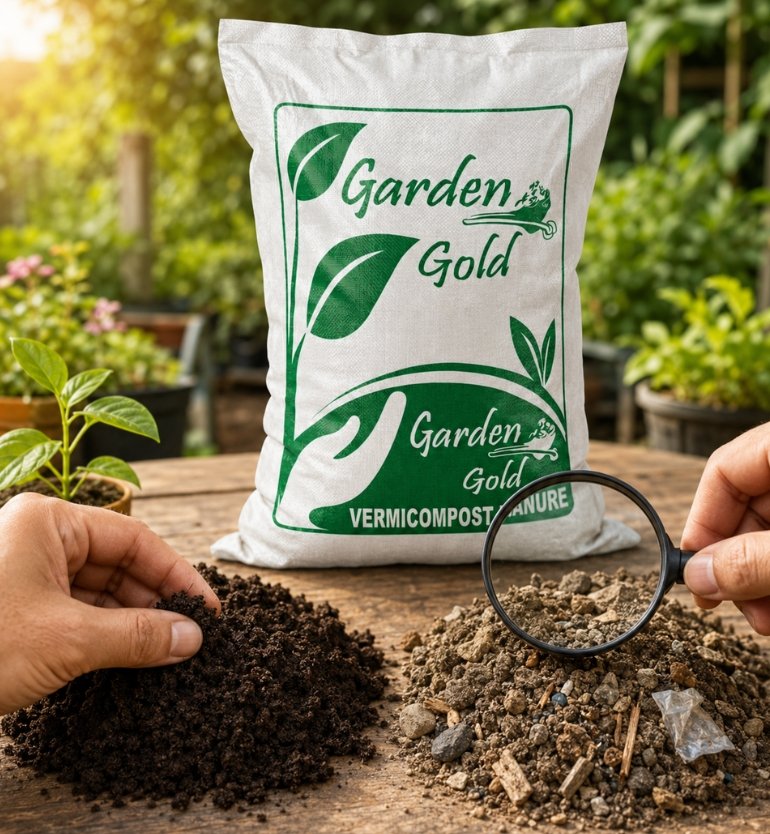
As demand for organic manure grows across Gujarat, so has the number of sellers offering vermicompost, and not all of them are selling the real thing. Some products labeled “vermicompost” are diluted with ordinary soil, sand, or partially decomposed waste to cut costs and increase bag weight. For a farmer, nursery, or landscaper paying for nutrient-rich compost, that’s money spent on filler material that does little for plant health.
Here’s how to check what you’re buying, using simple tests you can do yourself before or after purchase.
Why Adulteration Happens
Vermicompost production takes time — typically 45 to 90 days for proper decomposition and curing through earthworm activity. Some sellers, trying to meet demand faster or cut costs, mix in cheaper bulk material like garden soil, sand, or partially composted waste that hasn’t fully matured. The result looks similar to genuine vermicompost at a glance but delivers a fraction of the nutrient value.
Simple Tests to Check Vermicompost Quality
- The Texture and Color Test
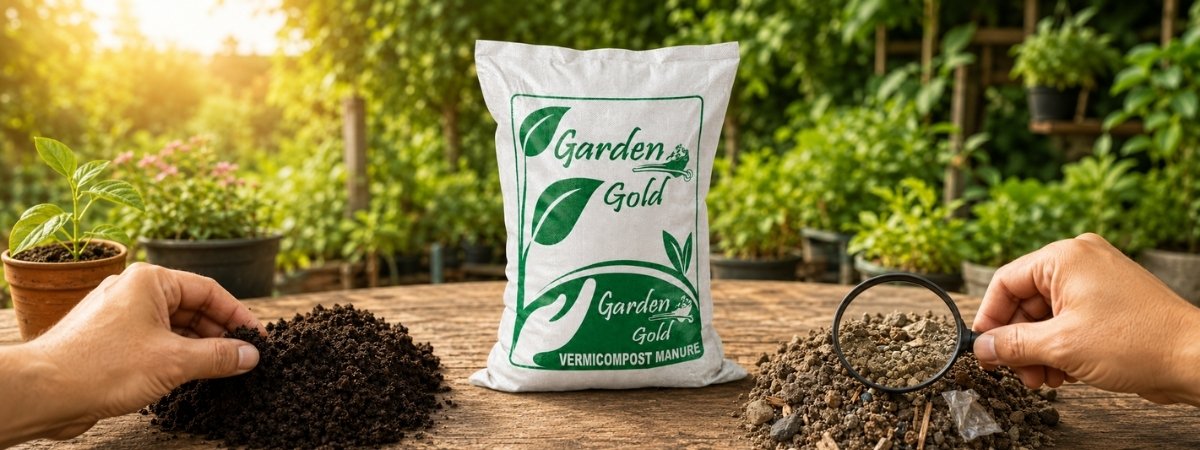
Genuine vermicompost is dark brown to black, fine, crumbly, and uniform in texture — similar to coffee grounds. If you see visible lumps, sand, stones, or inconsistent color throughout the bag, it likely contains filler material.
- The Smell Test
Properly cured vermicompost has a mild, earthy smell — similar to fresh soil after rain. A strong, foul, or ammonia-like odor usually indicates the material wasn’t fully decomposed before packaging, which can actually harm plant roots rather than help them.
- The Water Float Test
Take a small sample and mix it into a glass of water. Genuine vermicompost tends to disperse fairly evenly, with very little heavy sediment settling immediately at the bottom. If a large amount of sand or soil sinks quickly and separates out, the sample likely contains added filler.
- The Moisture Test
Squeeze a handful of vermicompost gently. It should feel slightly moist and hold its shape loosely without dripping water or feeling completely dry and dusty. Excessively dry material may indicate poor curing; soggy material may indicate poor storage or incomplete processing.
- Check for Visible Earthworm Activity Residue
Genuine vermicompost is the byproduct of earthworm digestion and often contains fine castings with a consistent granular structure. Bags that show no sign of this fine, granular texture — and instead look like raw, unprocessed organic waste — likely haven’t gone through a proper vermicomposting cycle.
Red Flags When Buying
- Price significantly lower than the typical market range — quality vermicompost has a real production cost, and unusually cheap pricing is often a sign of dilution
- Sellers who can’t explain their production process or raw material source
- No willingness to share batch information, lab reports, or facility details
- Inconsistent product from the same seller across different purchases
- Bags that feel unusually heavy for their size, which can indicate added soil or sand as bulk filler
What to Ask a Seller Before Buying
- What raw material is used, and is it consistent across batches?
- How long is the composting and curing cycle before packaging?
- Can you share a lab test report showing NPK and organic content?
- Can I see the production process or facility?
Buy From a Source You Can Verify
The simplest way to avoid adulterated vermicompost is to buy directly from a manufacturer willing to show you their process. At Garden Gold, our vermicompost is produced from 100% cow dung at our own facility in Mogar, Dist. Anand, with no distributor blending product in between us and you. We’re happy to walk customers through our production process and share quality details before you buy.
Dark color is a good general sign, but not definitive on its own — some adulterated products are darkened with added soil. Combine the color check with the smell, texture, and water tests for a more reliable assessment.
Yes. Incompletely decomposed organic material can release heat and ammonia as it continues breaking down in the soil, which can damage roots. Diluted vermicompost with high sand or soil content also delivers far less nutrient value than expected, affecting plant growth and yield.
Yes, reputable manufacturers can provide an NPK (Nitrogen, Phosphorus, Potassium) and organic carbon content report from a recognized soil testing lab. Always ask your supplier if this is available before placing a large order.
Buying directly from a manufacturer with a transparent, visible production process — rather than through resellers who may blend or repackage product — significantly reduces the risk of adulteration, since there's no additional party altering the product along the way.
