
How to Identify Fake or Adulterated Vermicompost Before You Buy
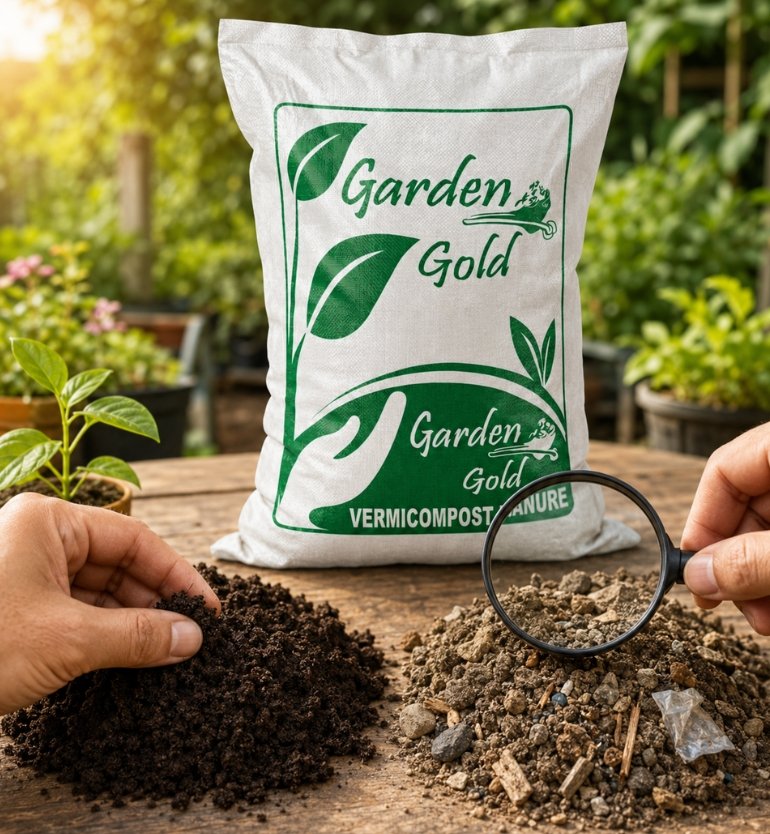
How to Identify Fake or Adulterated Vermicompost Before You Buy Home / July 18, 2026 vermi_admin As demand for organic manure grows across Gujarat, so has the number of sellers offering vermicompost, and not all of them are selling the real thing. Some products labeled “vermicompost” are diluted with ordinary soil, sand, or partially decomposed waste to cut costs and increase bag weight. For a farmer, nursery, or landscaper paying for nutrient-rich compost, that’s money spent on filler material that does little for plant health. Here’s how to check what you’re buying, using simple tests you can do yourself before or after purchase. Why Adulteration Happens Vermicompost production takes time — typically 45 to 90 days for proper decomposition and curing through earthworm activity. Some sellers, trying to meet demand faster or cut costs, mix in cheaper bulk material like garden soil, sand, or partially composted waste that hasn’t fully matured. The result looks similar to genuine vermicompost at a glance but delivers a fraction of the nutrient value. Simple Tests to Check Vermicompost Quality The Texture and Color Test Genuine vermicompost is dark brown to black, fine, crumbly, and uniform in texture — similar to coffee grounds. If you see visible lumps, sand, stones, or inconsistent color throughout the bag, it likely contains filler material. The Smell Test Properly cured vermicompost has a mild, earthy smell — similar to fresh soil after rain. A strong, foul, or ammonia-like odor usually indicates the material wasn’t fully decomposed before packaging, which can actually harm plant roots rather than help them. The Water Float Test Take a small sample and mix it into a glass of water. Genuine vermicompost tends to disperse fairly evenly, with very little heavy sediment settling immediately at the bottom. If a large amount of sand or soil sinks quickly and separates out, the sample likely contains added filler. The Moisture Test Squeeze a handful of vermicompost gently. It should feel slightly moist and hold its shape loosely without dripping water or feeling completely dry and dusty. Excessively dry material may indicate poor curing; soggy material may indicate poor storage or incomplete processing. Check for Visible Earthworm Activity Residue Genuine vermicompost is the byproduct of earthworm digestion and often contains fine castings with a consistent granular structure. Bags that show no sign of this fine, granular texture — and instead look like raw, unprocessed organic waste — likely haven’t gone through a proper vermicomposting cycle. Red Flags When Buying Price significantly lower than the typical market range — quality vermicompost has a real production cost, and unusually cheap pricing is often a sign of dilution Sellers who can’t explain their production process or raw material source No willingness to share batch information, lab reports, or facility details Inconsistent product from the same seller across different purchases Bags that feel unusually heavy for their size, which can indicate added soil or sand as bulk filler What to Ask a Seller Before Buying What raw material is used, and is it consistent across batches? How long is the composting and curing cycle before packaging? Can you share a lab test report showing NPK and organic content? Can I see the production process or facility? Buy From a Source You Can Verify The simplest way to avoid adulterated vermicompost is to buy directly from a manufacturer willing to show you their process. At Garden Gold, our vermicompost is produced from 100% cow dung at our own facility in Mogar, Dist. Anand, with no distributor blending product in between us and you. We’re happy to walk customers through our production process and share quality details before you buy. Does a darker color always mean better quality vermicompost? Dark color is a good general sign, but not definitive on its own — some adulterated products are darkened with added soil. Combine the color check with the smell, texture, and water tests for a more reliable assessment. Can adulterated vermicompost actually harm my plants? Yes. Incompletely decomposed organic material can release heat and ammonia as it continues breaking down in the soil, which can damage roots. Diluted vermicompost with high sand or soil content also delivers far less nutrient value than expected, affecting plant growth and yield. Is there a lab test I can request to confirm quality? Yes, reputable manufacturers can provide an NPK (Nitrogen, Phosphorus, Potassium) and organic carbon content report from a recognized soil testing lab. Always ask your supplier if this is available before placing a large order. How can I trust a supplier without testing every bag myself? Buying directly from a manufacturer with a transparent, visible production process — rather than through resellers who may blend or repackage product — significantly reduces the risk of adulteration, since there’s no additional party altering the product along the way. Previous Post
Vermicompost for Government Garden & Urban Greening Projects: A Buyer’s Guide for Gujarat
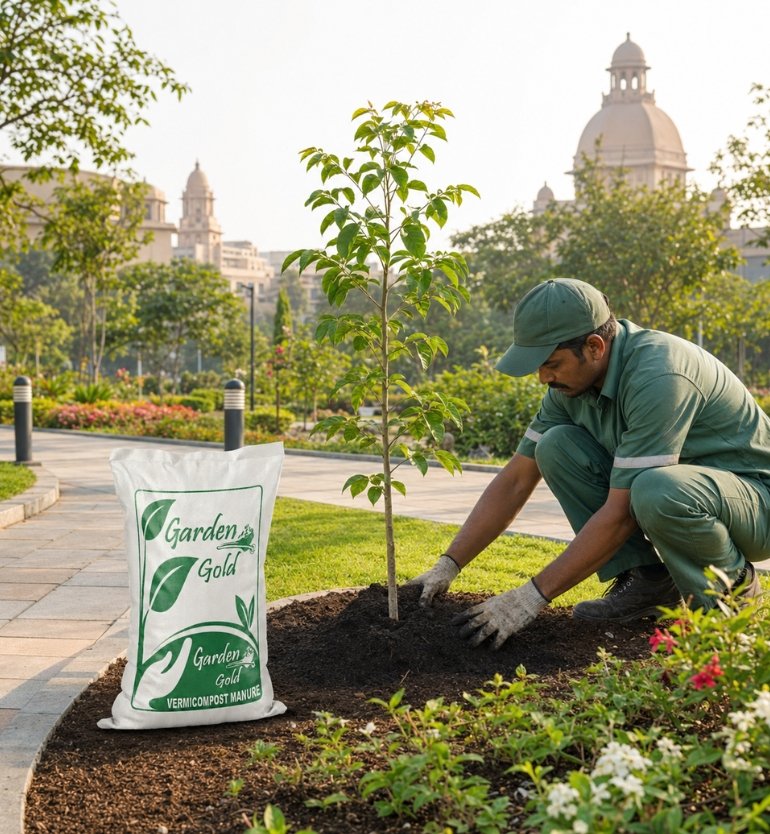
Why Real Estate Developers in Gujarat Are Choosing Vermicompost for Society Gardens & Common Areas – Copy Home / July 17, 2026 vermi_admin Gujarat’s cities are investing heavily in public green spaces — municipal parks, smart city avenue plantations, highway medians, riverfront landscaping, and housing board green belts. Most of these projects run on government budgets and timelines, which means the input supplier needs to deliver on three things simultaneously: consistent quality, large quantity, and dependable timelines. Vermicompost is increasingly the preferred organic input for these projects, but sourcing it for a government or institutional project works differently than sourcing it for a single farm or home garden. This guide covers what civic bodies, PWD horticulture departments, and landscaping contractors working on public tenders should know before specifying or purchasing vermicompost. Why Government Projects Are Moving Toward Vermicompost Chemical fertilizers can damage soil structure over time, especially in urban green belts that don’t get the seasonal rest or rotation that farmland does. Municipal horticulture departments are increasingly specifying organic manure for park lawns, roadside plantations, and median strips because: It improves soil water retention, reducing irrigation costs on large public landscaped areas It builds long-term soil health rather than just feeding the plant short-term, which matters for trees and shrubs maintained over years or decades It aligns with sustainability mandates many smart city and municipal projects now carry It reduces the runoff and groundwater contamination risk associated with chemical fertilizer overuse in public spaces What’s Different About Sourcing for a Government or Institutional Project Volume and Consistency A single municipal park or highway plantation stretch can require several tons of vermicompost. Unlike a retail buyer purchasing a few bags, institutional buyers need a supplier who can confirm production capacity upfront and guarantee the same quality across the entire order — not a mix of batches with varying nutrient content. Documentation Government tenders and PWD purchase processes typically require supporting documentation: product specification sheets, NPK and micronutrient content, manufacturing details, and sometimes lab test reports. A supplier should be able to provide these without delay. Delivery Scheduling Urban greening projects often run on fixed planting windows tied to monsoon timing or project handover dates. A supplier based within Gujarat, supplying directly from their own production site, can commit to delivery schedules far more reliably than an out-of-state trader managing multiple intermediaries. Direct Accountability When a civic project sources through a chain of distributors, accountability for quality issues gets diluted — no one party is fully responsible if a batch underperforms. Sourcing directly from the manufacturer means the same entity that produced the compost is the one answerable for it. Where Vermicompost Is Typically Used in Government & Urban Projects Municipal Park and garden maintenance — lawns, flower beds, and ornamental plantings that need long-term soil health, not just one-season fertilization Avenue and highway plantation — tree belts along roads and highways, where soil is often poor or compacted and benefits significantly from organic amendment Riverfront and lakefront landscaping — large public green corridors with high visibility and high maintenance expectations Housing board and government colony green belts — common area landscaping in public housing developments Smart city green infrastructure — pocket parks, traffic circles, and streetscape greening that’s part of broader urban development plans Questions a Procurement Officer or Contractor Should Ask a Supplier Can you supply the full required tonnage from a single production source, or will the order be split across multiple batches with potential quality variation? Can you provide a specification sheet with NPK content and moisture levels for documentation purposes? What is your delivery timeline for an order of this size, and can you commit to a fixed schedule tied to our planting window? Are you the manufacturer, or are you sourcing from another producer and reselling? Can you provide references from other institutional or government clients you’ve supplied? How Garden Gold Supports Institutional & Government Buyers We manufacture vermicompost directly at our own facility in Mogar, Dist. Anand, with a production capacity of 30,000–40,000 bags (50 kg each), giving us the scale to handle large institutional orders without quality drift across batches. Because we sell direct — with no distributor layer — we can commit to clear delivery timelines and provide full product documentation for tender and procurement requirements. If you’re sourcing vermicompost for a municipal, PWD, smart city, or institutional landscaping project in Gujarat, we’re glad to discuss specifications, volume pricing, and delivery scheduling. Previous Post
