
Vermicompost for Government Garden & Urban Greening Projects: A Buyer’s Guide for Gujarat
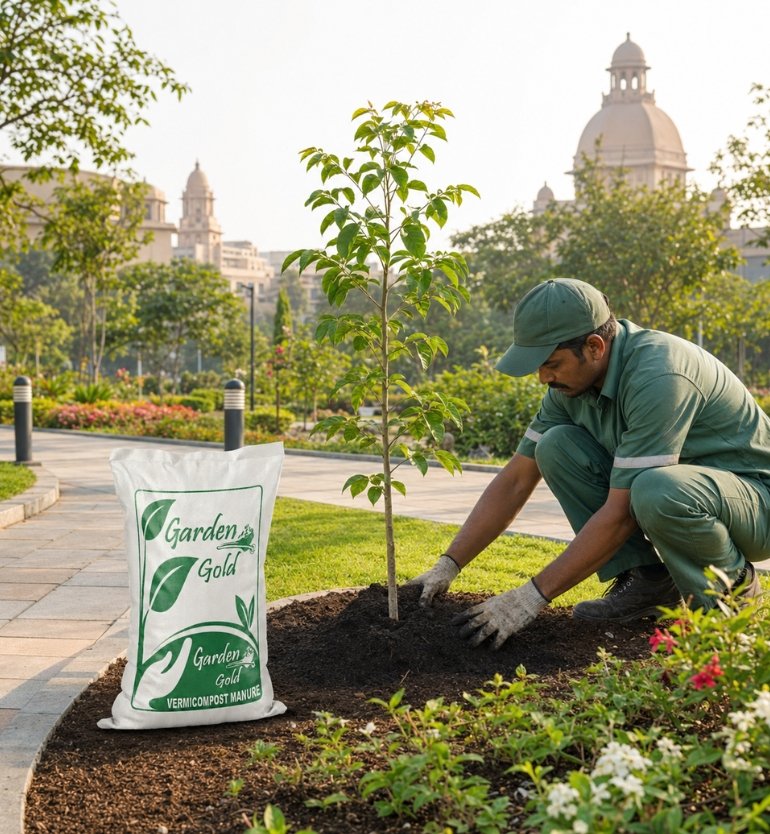
Gujarat’s cities are investing heavily in public green spaces — municipal parks, smart city avenue plantations, highway medians, riverfront landscaping, and housing board green belts. Most of these projects run on government budgets and timelines, which means the input supplier needs to deliver on three things simultaneously: consistent quality, large quantity, and dependable timelines. Vermicompost is increasingly the preferred organic input for these projects, but sourcing it for a government or institutional project works differently than sourcing it for a single farm or home garden.
This guide covers what civic bodies, PWD horticulture departments, and landscaping contractors working on public tenders should know before specifying or purchasing vermicompost.
Why Government Projects Are Moving Toward Vermicompost
Chemical fertilizers can damage soil structure over time, especially in urban green belts that don’t get the seasonal rest or rotation that farmland does. Municipal horticulture departments are increasingly specifying organic manure for park lawns, roadside plantations, and median strips because:
- It improves soil water retention, reducing irrigation costs on large public landscaped areas
- It builds long-term soil health rather than just feeding the plant short-term, which matters for trees and shrubs maintained over years or decades
- It aligns with sustainability mandates many smart city and municipal projects now carry
- It reduces the runoff and groundwater contamination risk associated with chemical fertilizer overuse in public spaces
What's Different About Sourcing for a Government or Institutional Project
- Volume and Consistency
A single municipal park or highway plantation stretch can require several tons of vermicompost. Unlike a retail buyer purchasing a few bags, institutional buyers need a supplier who can confirm production capacity upfront and guarantee the same quality across the entire order — not a mix of batches with varying nutrient content.
- Documentation
Government tenders and PWD purchase processes typically require supporting documentation: product specification sheets, NPK and micronutrient content, manufacturing details, and sometimes lab test reports. A supplier should be able to provide these without delay.
- Delivery Scheduling
Urban greening projects often run on fixed planting windows tied to monsoon timing or project handover dates. A supplier based within Gujarat, supplying directly from their own production site, can commit to delivery schedules far more reliably than an out-of-state trader managing multiple intermediaries.
- Direct Accountability
When a civic project sources through a chain of distributors, accountability for quality issues gets diluted — no one party is fully responsible if a batch underperforms. Sourcing directly from the manufacturer means the same entity that produced the compost is the one answerable for it.
Where Vermicompost Is Typically Used in Government & Urban Projects
- Municipal Park and garden maintenance — lawns, flower beds, and ornamental plantings that need long-term soil health, not just one-season fertilization
- Avenue and highway plantation — tree belts along roads and highways, where soil is often poor or compacted and benefits significantly from organic amendment
- Riverfront and lakefront landscaping — large public green corridors with high visibility and high maintenance expectations
- Housing board and government colony green belts — common area landscaping in public housing developments
- Smart city green infrastructure — pocket parks, traffic circles, and streetscape greening that’s part of broader urban development plans
Questions a Procurement Officer or Contractor Should Ask a Supplier
- Can you supply the full required tonnage from a single production source, or will the order be split across multiple batches with potential quality variation?
- Can you provide a specification sheet with NPK content and moisture levels for documentation purposes?
- What is your delivery timeline for an order of this size, and can you commit to a fixed schedule tied to our planting window?
- Are you the manufacturer, or are you sourcing from another producer and reselling?
- Can you provide references from other institutional or government clients you’ve supplied?
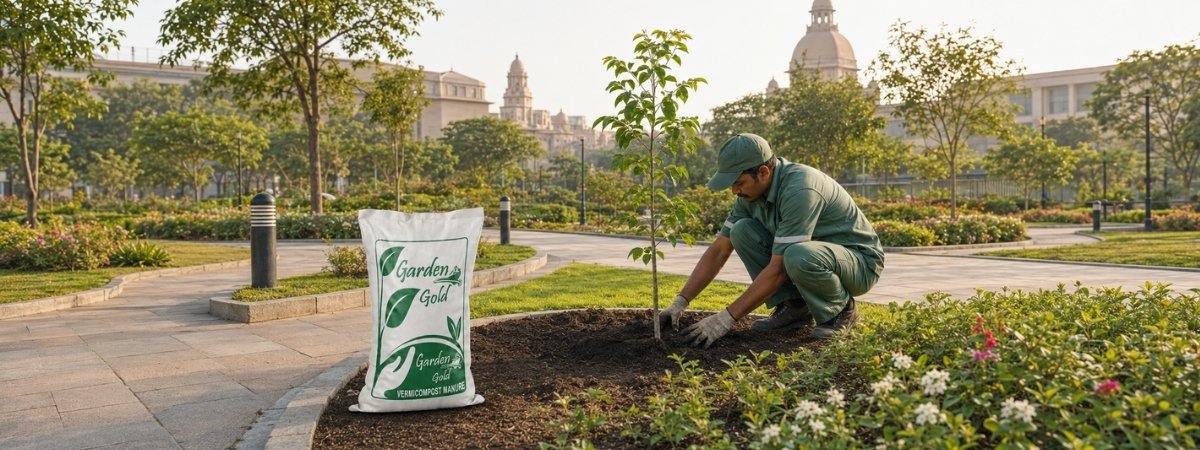
How Garden Gold Supports Institutional & Government Buyers
We manufacture vermicompost directly at our own facility in Mogar, Dist. Anand, with a production capacity of 30,000–40,000 bags (50 kg each), giving us the scale to handle large institutional orders without quality drift across batches. Because we sell direct — with no distributor layer — we can commit to clear delivery timelines and provide full product documentation for tender and procurement requirements.
If you’re sourcing vermicompost for a municipal, PWD, smart city, or institutional landscaping project in Gujarat, we’re glad to discuss specifications, volume pricing, and delivery scheduling.
