
Vermicompost Dosage Guide for Lawns, Flowering Plants & Pots
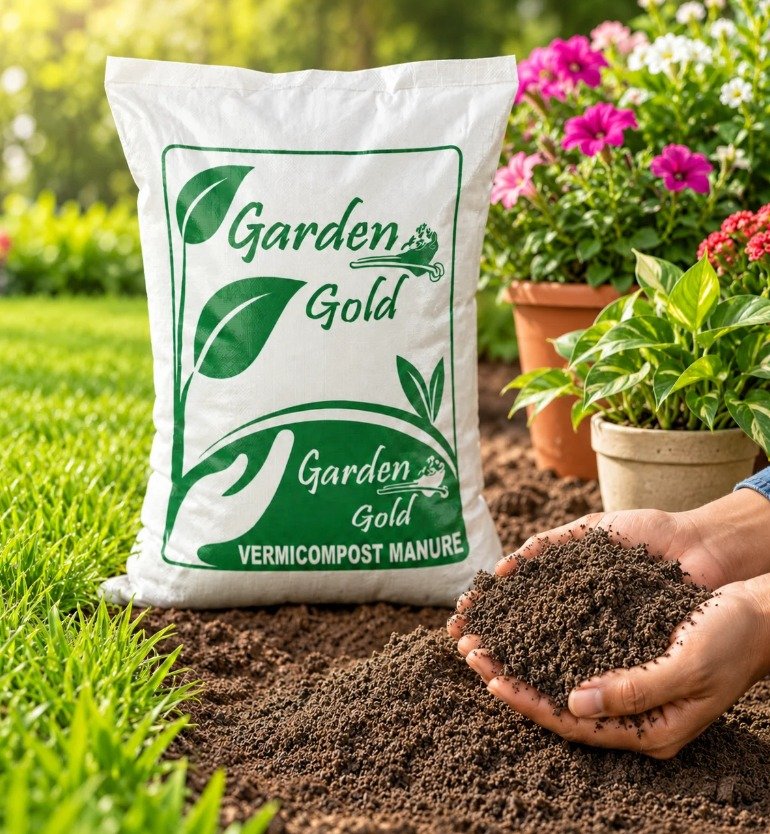
Vermicompost Dosage Guide for Lawns, Flowering Plants & Pots Home / October 21, 2026 vermi_admin One of the most common questions we get from garden lovers — whether they’re maintaining a terrace garden in Ahmedabad, a balcony in Surat, or a front lawn in Vadodara — is simple: “How much vermicompost should I actually use?” Too little and you won’t see much difference. Too much, and you risk overwhelming the plant or wasting product. This guide gives you practical, easy-to-follow ratios for the most common home and garden uses. General Rule of Thumb As a starting point, vermicompost is typically mixed at 10-20% of total soil volume for potted plants, and applied as a top dressing of 1-2 kg per square meter for lawns and garden beds. From there, dosage varies a bit by plant type, as outlined below. Dosage for Potted Plants (Balcony & Terrace Gardens) Pot Size Vermicompost Quantity (mixed into soil at planting) Top-up (every 2-3 months) Small pot (6-8 inch) 100-150 grams 1-2 tablespoons Medium pot (10-12 inch) 250-400 grams 2-3 tablespoons Large pot/tub (14+ inch) 500g-1 kg 1/4 cup Mix vermicompost into the top 2-3 inches of soil when topping up an existing potted plant, rather than just sprinkling it on the surface, so it integrates with the root zone faster. Dosage for Flowering Plants Roses: Mix 200-300 grams into the soil at planting, then top-dress with 100 grams every 6-8 weeks during the growing season for sustained blooming. Marigold: Marigolds respond well to a lighter touch — 100-150 grams at planting is usually sufficient, with a small top-up once mid-season. Hibiscus: Being a heavier feeder, hibiscus benefits from 300-400 grams at planting and a top-up of 150-200 grams every 6-8 weeks, especially before flowering season. Bougainvillaea and other flowering shrubs: 300-500 grams at planting depending on shrub size, with seasonal top-ups before the main flowering period. Dosage for Lawns For an established lawn, apply vermicompost as a top dressing at 1-2 kg per square meter, spread evenly and lightly worked into the top layer of soil or watered in well. For a new lawn being laid from scratch, mix vermicompost into the topsoil at roughly 2-3 kg per square meter before laying turf or sowing grass seed, to give roots a strong nutrient base from the start. Apply lawn dosing 2-3 times a year — typically before monsoon, post-monsoon, and once in winter — rather than as a single large application, for more even, sustained results. Dosage for Vegetable Pots & Kitchen Gardens Vegetables are generally heavier feeders than ornamental plants. For tomato, brinjal, or chilli in pots, mix 300-500 grams per medium pot at planting, with a top-up of 100-150 grams every 4-6 weeks during the fruiting period. Tips for Best Results Always water lightly after applying vermicompost to help nutrients begin integrating into the soil. Avoid piling vermicompost directly against plant stems; spread it around the root zone instead. For pots, refresh a portion of the soil with new vermicompost-enriched mix once a year, since potted soil depletes faster than open ground. Pair vermicompost with cocopeat in pots for better moisture retention, especially during Gujarat’s hot summer months. Get the Right Quantity for Your Garden Whether you’re maintaining a few balcony pots or a full lawn, Garden Gold’s vermicompost is available in 5 kg packs ideal for home gardeners, right up to bulk quantities for landscaping projects — all produced directly at our facility in Mogar, Dist. Anand. Can I use too much vermicompost on my plants? Vermicompost is gentle compared to chemical fertilizer and unlikely to “burn” plants the way over-fertilizing with chemical inputs can. That said, excessive quantities don’t add extra benefit and can affect soil drainage in pots if overdone — sticking to the recommended ranges gives the best results. How often should I add vermicompost to potted plants? For most home garden pots, a small top-up every 6-8 weeks during the active growing season is sufficient to maintain healthy nutrient levels. Is vermicompost enough on its own, or do I still need other fertilizer? For most home gardens and balcony plants, vermicompost alone provides a well-rounded nutrient base. Heavy-feeding flowering or fruiting plants may benefit from occasional supplementary organic feeds during peak blooming or fruiting periods. Can I use the same vermicompost for both lawn and potted plants? Yes, quality vermicompost works across both uses — the difference is in application quantity and method, not the product itself. Previous Post
