
How Much Vermicompost Should You Use for Different Crops?
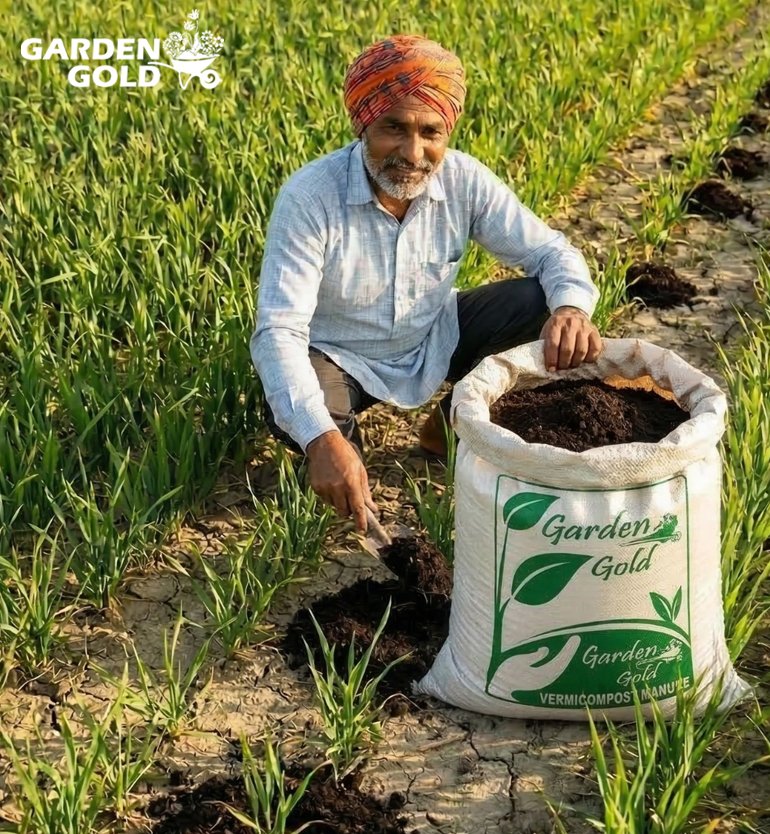
Vermicompost fertilizer is widely known as black gold for plants because of its ability to improve soil fertility, enhance root strength, and support sustainable crop production. However, to achieve the best results, it is important to apply the correct amount based on crop type and soil conditions.
Using too little may limit plant performance, while excessive use does not necessarily improve growth. The right dosage ensures steady nutrient release and long-term soil health.
Now, let’s understand how much vermicompost fertilizer should be used for different crops.
Why Proper Vermicompost Fertilizer Dosage Matters
Vermicompost fertilizer releases nutrients gradually while improving soil biology. Unlike synthetic fertilizers, it focuses on strengthening the soil ecosystem.
- Correct application helps:
- Improve nutrient absorption
- Encourage deeper root growth
- Strengthen beneficial soil microbes
- Enhance moisture retention
- Maintain consistent crop productivity
- A balanced application ensures crops receive steady nutrition without stress.
Crop-Wise Vermicompost Fertilizer Dosage Guide
1. Field Crops (Wheat, Rice, Maize, Pulses)
For large-scale field crops, vermicompost fertilizer works best as a basal application.
Recommended dosage:
2 to 3 tons per acre, mixed evenly into the soil during land preparation.
For soils low in organic matter, up to 4 tons per acre may be applied.
2. Vegetable Crops
Vegetables require higher nutrient support due to rapid growth and fruit production.
Basal application:
2 to 3 tons per acre before transplanting.
Top dressing:
500 kg to 1 ton per acre during flowering or fruiting.
For kitchen gardens, apply 200 to 300 grams per plant and lightly mix into the soil.
3. Nursery Plants and Ornamentals
For nursery beds and flowering plants:
Potted plants:
100 to 250 grams per pot, depending on size.
Garden beds:
1 to 2 kg per square meter before planting.
Reapply every 30 to 45 days to maintain soil vitality.
4. Lawns and Turf For lawns and landscaping areas:
Apply 2-3 kg per 10 square meters.
Spread evenly and irrigate lightly afterwards.
Repeat every 2 to 3 months during the growing season.
If you prefer a quick visual explanation of crop-wise application, you can also watch our short guide here: https://www.instagram.com/p/DKBUyF0hk9C/
Adjusting Quantity Based on Soil Type
The amount of vermicompost fertilizer may vary depending on soil conditions:
- Sandy soils may require slightly higher quantities.
- Clay soils benefit from moderate application with proper mixing.
- Fertile loamy soils require a maintenance-level application.
Soil testing is recommended for commercial farming to optimize dosage.
Common Mistakes to Avoid
- Applying vermicompost fertilizer without mixing it into the soil
- Using excessive quantities to expect faster results
- Skipping regular applications
- Ignoring irrigation management
Moderate, consistent application delivers better long-term results than heavy, one-time use.
Conclusion
Using the correct amount of vermicompost fertilizer for different crops is essential for maximizing plant growth and maintaining soil health. From field crops and vegetables to fruit trees, nurseries, and lawns, dosage should be tailored to crop type and soil condition.
Vermicompost fertilizer strengthens the soil ecosystem rather than just feeding plants. When applied in balanced quantities, it supports sustainable productivity and healthier harvests.
Healthy soil today ensures better yields tomorrow.
For potted plants and garden crops, vermicompost fertilizer can be applied every 30 to 45 days to maintain soil fertility and plant health.
Although vermicompost fertilizer is organic and safe, excessive application may lead to nutrient imbalance. Moderate and consistent application is recommended.
Yes, vermicompost fertilizer should be mixed into the topsoil and followed by light irrigation to improve nutrient absorption and soil conditioning.
