
Why Real Estate Developers in Gujarat Are Choosing Vermicompost for Society Gardens & Common Areas
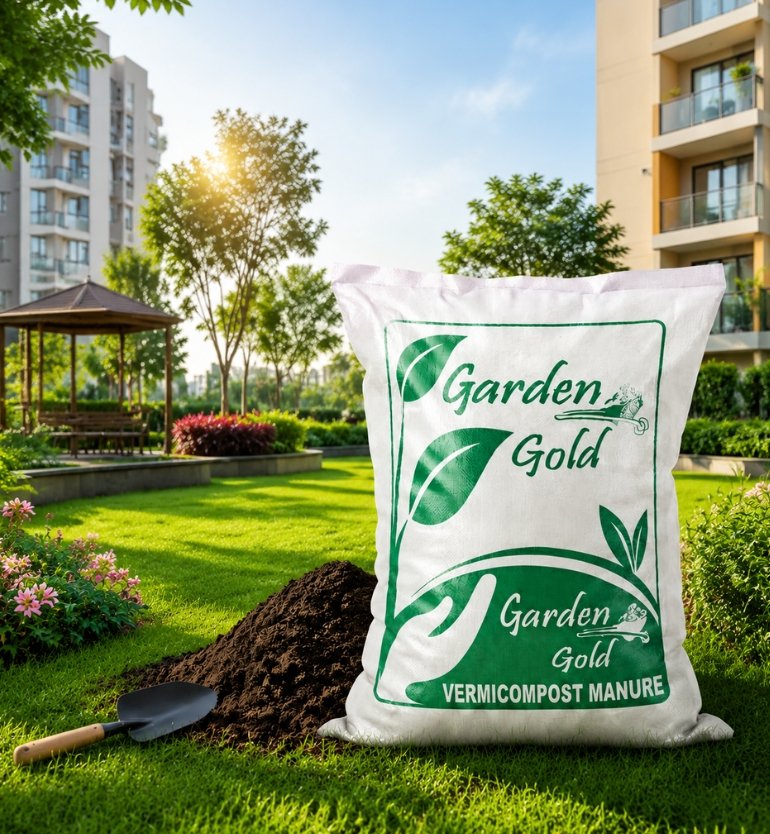
Why Real Estate Developers in Gujarat Are Choosing Vermicompost for Society Gardens Home / July 15, 2026 vermi_admin Landscaped common areas have become a real selling point in residential projects — buyers expect green lawns, healthy trees, and well-maintained gardens not just at handover, but years into living in society. That long-term expectation is exactly where many developers run into trouble: lawns fed only on chemical fertilizer often look good for the launch and site visits, then start declining within a couple of years as soil quality degrades. More developers and facility management teams across Gujarat are now specifying vermicompost for society gardens, villa project landscaping, and commercial common areas — not as a one-time input, but as part of an ongoing soil management plan. Here’s why, and what to consider when sourcing it for a project. The Problem with Chemical-Only Landscaping in Townships Chemical fertilizers feed the plant but do little for the soil itself. Over repeated maintenance cycles, soil in heavily landscaped common areas can become compacted, lose its water-holding capacity, and require more frequent fertilizing and watering just to maintain the same look. For a developer or facility management company, that translates into rising long-term maintenance costs — exactly the kind of recurring expense that ends up as a line-item homeowners’ associations complain about. Vermicompost addresses this differently: it improves soil structure and water retention over time, which means lawns and garden beds need less frequent watering and fertilizing as the soil itself gets healthier — a maintenance cost advantage that compounds the longer a project has been occupied. Where It Fits in a Real Estate Project Pre-handover landscaping — establishing healthy soil for lawns, hedges, and ornamental beds before residents move in, so the garden holds up well past the first season Villa and bungalow project plots — individual unit gardens where buyers often expect ready, thriving greenery as part of the property value Common area and clubhouse gardens — high-visibility green spaces that need to look consistently good with minimal ongoing intervention Avenue plantation within township boundaries — tree-lined internal roads that benefit from organic soil amendment at planting stage Post-handover AMC (annual maintenance contract) landscaping — facility management teams managing gardens long-term benefit from lower input costs once soil health improves What Developers and Contractors Should Look for in a Supplier Bulk Capacity Without Quality Drift A township project can require vermicompost across multiple phases over months or years. The supplier needs production capacity large enough that quality stays consistent from the first phase to the last — not a smaller operation that has to blend in inconsistent batches to meet volume. Transport Cost on Large Orders Landscaping projects use vermicompost in bulk — often multiple tons across a project’s common areas. Freight becomes a meaningful cost at that scale, so sourcing from a Gujarat-based manufacturer rather than an out-of-state supplier directly affects total project cost. Direct Sourcing for Price Predictability Buying directly from the manufacturer, without a distributor markup, gives developers more predictable bulk pricing — useful when landscaping budgets are set early in a project and need to hold across phases. Application Guidance for Different Use Cases Lawns, ornamental beds, and avenue trees each need different application rates. A supplier who can guide contractors on dosage by use case (not just sell bags) adds real value to the landscaping team executing the project. Questions to Ask Before Sourcing for a Project Can you supply the full project quantity consistently across multiple phases or years? What will transport cost for an order of this size, delivered to our site? Are we buying directly from your production facility, or through a reseller? Can you advise on different application rates for lawns, beds, and trees? Do you have references from other real estate or landscaping projects you’ve supplied? How Garden Gold Supports Real Estate & Landscaping Projects We produce vermicompost directly at our facility in Mogar, Dist. Anand, with a capacity of 30,000–40,000 bags (50 kg each) — enough to support large township and commercial landscaping projects without compromising consistency across phases. Selling direct, with no distributor in between, keeps bulk pricing predictable and transport costs lower for projects across Gujarat. If you’re planning landscaping for a residential, commercial, or township project, we’re happy to discuss bulk quantities, phased delivery, and application guidance for your contractors. Previous Post
How to Choose the Right Vermicompost Supplier in Gujarat: 7 Questions to Ask Before You Buy
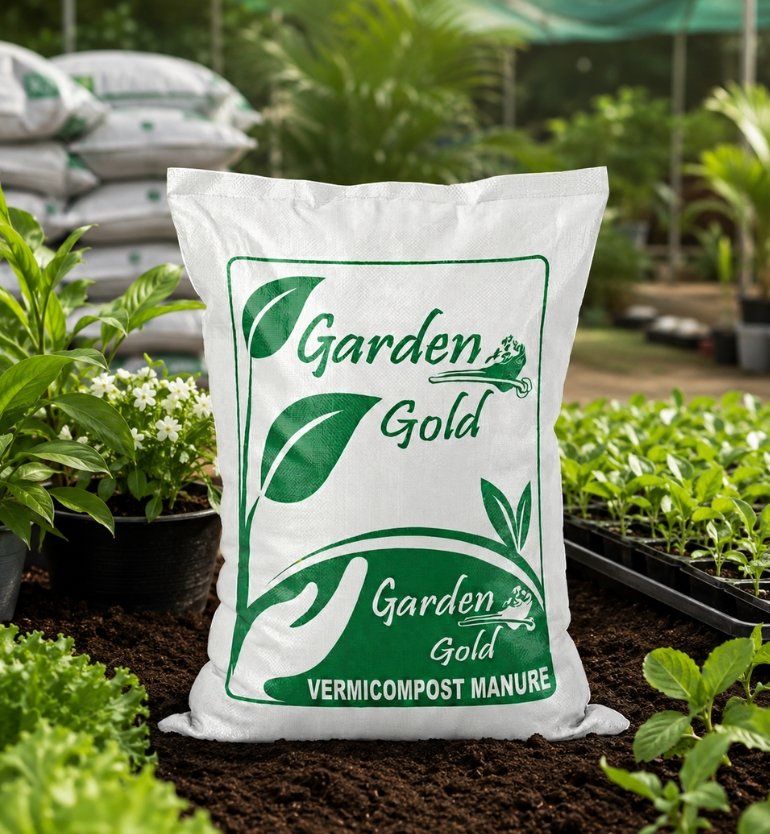
How to Choose the Right Vermicompost Supplier in Gujarat: 7 Questions to Ask Before You Buy Home / July 15, 2026 vermi_admin If you’ve searched for a vermicompost supplier in Gujarat, you’ve probably noticed something: a lot of the “leading suppliers” that show up aren’t actually based in Gujarat. Some operate out of Maharashtra or other states and ship their product across state lines to reach you. That might not sound like a big deal — until you calculate the transport cost, or until your bags arrive late during peak sowing season, or until you realize the manure has dried out or lost quality during a 500+ km journey. Before you commit to a supplier, here are seven questions worth asking. We’ll also explain why these questions matter more in the vermicompost business than in almost any other agri-input purchase. 1. Is the Supplier Actually Based in Gujarat? Vermicompost is bulky, heavy, and sold in 50 kg, 25 kg, or 5 kg bags — not a small SKU you can courier cheaply. When a supplier is based outside the state, freight charges get added to every single order, and that cost is either passed on to you or recovered by cutting corners on quality. A Gujarat-based manufacturer, by contrast, can deliver to farms, nurseries, and project sites across Anand, Ahmedabad, Vadodara, Surat, and Rajkot at a fraction of the freight cost an out-of-state supplier would charge. Shorter distance also means faster delivery — critical when you’re racing to apply manure before monsoon sowing or a transplanting window. Question to ask: “Where is your production facility located, and what will transport cost me to my site?” 2. Do You Buy Direct From the Manufacturer, or Through a Middleman? Most vermicompost in the market passes through at least one layer of trading — a distributor or reseller who buys in bulk from a manufacturer and marks up the price before it reaches you. You end up paying for an extra link in the chain without getting any extra value. Buying direct from the farm that actually produces the vermicompost means: No distributor margin added to your price No uncertainty about who is responsible if quality varies Direct access to the people who can answer questions about the product’s composition, moisture content, or application rate Fresher stock, since it isn’t sitting in a middleman’s warehouse before reaching you Question to ask: “Am I buying directly from your production unit, or from a dealer who buys from someone else?” 3. What Is Their Actual Production Capacity? A supplier’s capacity tells you two things: whether they can fulfill large or repeat orders reliably, and whether they have the scale and process control to maintain consistent quality batch after batch. A small-scale or seasonal producer may run out of stock right when you need it most, or vary in quality from one batch to the next. Question to ask: “What is your monthly production capacity, and can you guarantee supply during peak season?” 4. What Raw Material Goes Into the Compost? Not all vermicompost is created equal. Some manufacturers use mixed organic waste of inconsistent origin. Others use 100% cow dung as the base material, which tends to produce a more consistent nutrient profile and is generally preferred for both farming and garden use. Question to ask: “What is your raw material, and is it consistent across every batch?” 5. Can They Show You the Production Process? A manufacturer confident in their process should be willing to show you — through photos, videos, or a farm visit — how the compost is made, cured, and packed. This is one of the simplest ways to separate genuine producers from traders repackaging bought-in material. Question to ask: “Can I see your production site or process documentation?” 6. What Do Existing Customers Say? Testimonials from farmers, nurseries, or landscaping contractors who have used the product across multiple seasons are more reliable than marketing claims. Ask specifically about repeat usage — a one-time purchase doesn’t tell you much, but a customer who keeps reordering season after season does. Question to ask: “Can you connect me with existing customers in my district who’ve used your product for more than one season?” 7. Do They Understand Gujarat’s Soil and Crops? A supplier who works specifically within Gujarat will have practical, on-ground experience with the state’s major crops — cotton, groundnut, castor, bajra, cumin — and its soil and climate conditions, from the black cotton soils of Saurashtra to the arid stretches of Kutch. That local experience translates into better dosage guidance and application advice than a generic, one-size-fits-all recommendation from a supplier serving a dozen different states. Question to ask: “Can you advise me on dosage specific to my crop and region, or is your advice generic?” Why This Matters More Than It Seems It’s tempting to treat vermicompost as a commodity — buy whichever bag is cheapest per kg. But the real cost includes freight, middleman margins, inconsistent quality, and the yield difference between a properly cured, nutrient-rich compost and a rushed or diluted one. A locally based, direct-from-farm supplier with real production scale tends to win on all four of those factors at once, even when the sticker price per bag looks similar. How Garden Gold Answers These Questions We’re a Gujarat-based vermicompost manufacturer producing 30,000–40,000 bags (50 kg each) directly from our own facility in Mogar, Dist. Anand. There’s no distributor or middleman in our supply chain — when you order from Garden Gold, you’re buying straight from the source. That keeps transport costs lower for customers across Gujarat, keeps our stock fresh, and means the people answering your questions are the same people who manage production. If you’re evaluating suppliers for your farm, nursery, landscaping project, or institutional garden, we’re happy to walk you through our process, share batch details, and connect you with existing customers in your area. Previous Post
