
How Much Vermicompost Should You Use for Different Crops?
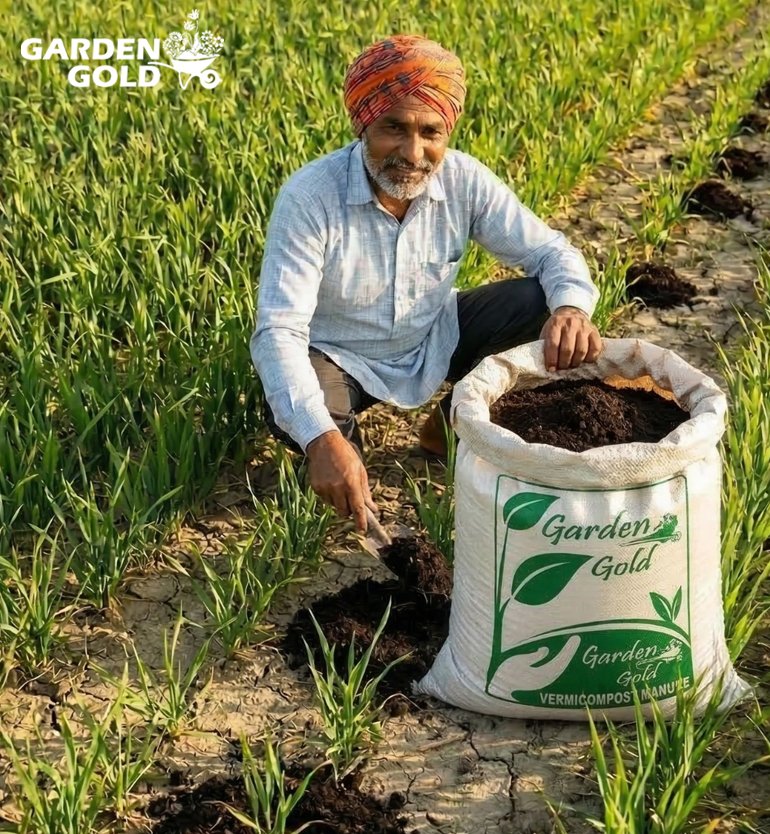
How Much Vermicompost Should You Use for Different Crops? Home / March 20, 2026 vermi_admin Vermicompost fertilizer is widely known as black gold for plants because of its ability to improve soil fertility, enhance root strength, and support sustainable crop production. However, to achieve the best results, it is important to apply the correct amount based on crop type and soil conditions. Using too little may limit plant performance, while excessive use does not necessarily improve growth. The right dosage ensures steady nutrient release and long-term soil health. Now, let’s understand how much vermicompost fertilizer should be used for different crops. Why Proper Vermicompost Fertilizer Dosage Matters Vermicompost fertilizer releases nutrients gradually while improving soil biology. Unlike synthetic fertilizers, it focuses on strengthening the soil ecosystem. Correct application helps: Improve nutrient absorption Encourage deeper root growth Strengthen beneficial soil microbes Enhance moisture retention Maintain consistent crop productivity A balanced application ensures crops receive steady nutrition without stress. Crop-Wise Vermicompost Fertilizer Dosage Guide 1. Field Crops (Wheat, Rice, Maize, Pulses) For large-scale field crops, vermicompost fertilizer works best as a basal application. Recommended dosage: 2 to 3 tons per acre, mixed evenly into the soil during land preparation. For soils low in organic matter, up to 4 tons per acre may be applied. 2. Vegetable Crops Vegetables require higher nutrient support due to rapid growth and fruit production. Basal application: 2 to 3 tons per acre before transplanting. Top dressing:500 kg to 1 ton per acre during flowering or fruiting. For kitchen gardens, apply 200 to 300 grams per plant and lightly mix into the soil. 3. Nursery Plants and Ornamentals For nursery beds and flowering plants: Potted plants: 100 to 250 grams per pot, depending on size. Garden beds: 1 to 2 kg per square meter before planting. Reapply every 30 to 45 days to maintain soil vitality. 4. Lawns and Turf For lawns and landscaping areas: Apply 2-3 kg per 10 square meters.Spread evenly and irrigate lightly afterwards. Repeat every 2 to 3 months during the growing season. If you prefer a quick visual explanation of crop-wise application, you can also watch our short guide here: https://www.instagram.com/p/DKBUyF0hk9C/ Adjusting Quantity Based on Soil Type The amount of vermicompost fertilizer may vary depending on soil conditions: Sandy soils may require slightly higher quantities. Clay soils benefit from moderate application with proper mixing. Fertile loamy soils require a maintenance-level application. Soil testing is recommended for commercial farming to optimize dosage. Common Mistakes to Avoid Applying vermicompost fertilizer without mixing it into the soil Using excessive quantities to expect faster results Skipping regular applications Ignoring irrigation management Moderate, consistent application delivers better long-term results than heavy, one-time use. Conclusion Using the correct amount of vermicompost fertilizer for different crops is essential for maximizing plant growth and maintaining soil health. From field crops and vegetables to fruit trees, nurseries, and lawns, dosage should be tailored to crop type and soil condition. Vermicompost fertilizer strengthens the soil ecosystem rather than just feeding plants. When applied in balanced quantities, it supports sustainable productivity and healthier harvests. Healthy soil today ensures better yields tomorrow. How often should vermicompost fertilizer be applied? For potted plants and garden crops, vermicompost fertilizer can be applied every 30 to 45 days to maintain soil fertility and plant health. Is it possible to overuse vermicompost fertilizer? Although vermicompost fertilizer is organic and safe, excessive application may lead to nutrient imbalance. Moderate and consistent application is recommended. Should vermicompost fertilizer be mixed into the soil? Yes, vermicompost fertilizer should be mixed into the topsoil and followed by light irrigation to improve nutrient absorption and soil conditioning. Previous Post
What is Vermicompost and Why is it Called “Black Gold”?
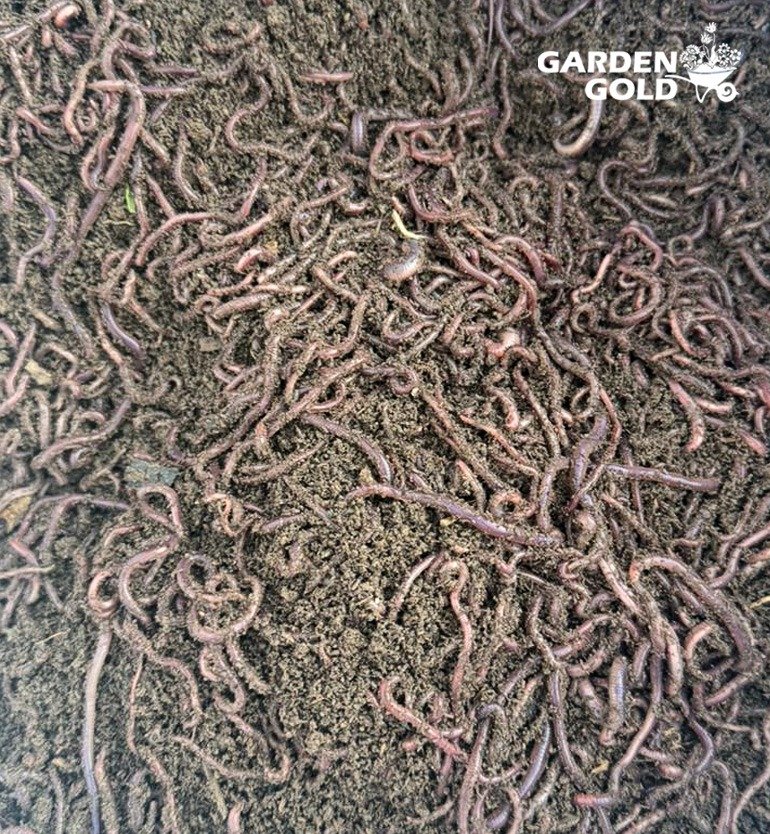
What is Vermicompost and Why is it Called “Black Gold”? Home / March 20, 2026 vermi_admin Healthy soil is the backbone of productive farming and thriving gardens. Among the many organic soil enhancers available today, vermicompost stands out as one of the most powerful and sustainable options. Often referred to as “black gold,” vermicompost has earned this title because of its exceptional value to soil health and plant productivity. But what exactly is vermicompost, and why is it called black gold? Let’s explore. What is Vermicompost? Vermicompost is a nutrient-rich organic fertilizer produced through the natural process of vermicomposting. In this process, earthworms break down biodegradable organic materials such as crop residues, vegetable waste, dry leaves, and farm byproducts. As earthworms digest organic matter, they produce finely processed castings, commonly known as worm casts. These casts form vermicompost – a dark, crumbly, soil-like material packed with essential nutrients and beneficial microorganisms. Compared to traditional compost, vermicompost has a finer texture, is more biologically active, and is readily available for plant uptake. It not only supplies nutrients but also improves soil structure and long-term fertility. Why is Vermicompost Called “Black Gold”? The term “black gold” reflects both appearance and agricultural value. Worm casts are commonly called black gold because they are dark in colour and highly beneficial to soil and crop systems. Vermicompost earns this name due to its powerful combination of properties: 1. Rich in Nutrients Vermicompost contains essential macronutrients such as nitrogen, phosphorus, and potassium, along with important micronutrients. These nutrients are available in plant-ready forms for efficient uptake. 2. Contains Growth-Promoting Substances Research shows that worm castings include natural growth hormones and enzymes that stimulate root development, flowering, and overall plant vigor. 3. Supports Beneficial Soil Microflora Vermicompost enhances soil biology by promoting the growth of beneficial bacteria and fungi. These microorganisms improve nutrient cycling and strengthen soil health. 4. Helps Suppress Pathogenic Microbes One reason vermicompost is valued in sustainable agriculture is its ability to reduce soil-borne diseases by encouraging a balanced microbial ecosystem. 5. Improves Soil Structure and Fertility Its fine texture improves aeration, moisture retention, and root penetration. Over time, repeated application builds long-term soil fertility. Because of these combined advantages, farmers and agricultural experts regard vermicompost as one of the most valuable organic inputs available – hence the name black gold. Vermicompost Production Methodology The quality of vermicompost depends largely on how it is produced. A systematic production method ensures the production of nutrient-rich, biologically active compost. 1. Selection of Organic Raw Materials Biodegradable agricultural waste, such as crop residues, dry leaves, vegetable waste, and farmyard manure, is selected. Materials should be free from plastics, chemicals, and non-degradable substances. 2. Pre-Decomposition Before introducing earthworms, the organic waste is partially decomposed for 10 to 15 days. This reduces heat generated during initial microbial breakdown and creates a suitable environment for worms. 3. Bed Preparation Composting beds are prepared either on the ground or in raised structures. A base layer of coarse materials, such as dry straw or coconut husk, is placed to improve aeration and drainage. 4. Introduction of Earthworms Suitable earthworm species are introduced onto the prepared organic material. These worms feed on the partially decomposed waste and convert it into nutrient-rich castings. 5. Moisture and Shade Management Moisture levels are maintained at approximately 60 to 70 per cent. The beds are protected from direct sunlight and heavy rainfall to create a stable environment for worm activity. 6. Compost Maturation and Harvesting Within 45 to 60 days, the organic waste is converted into fine, dark vermicompost. The compost is separated from worms, sieved if necessary, and stored in cool, shaded conditions to maintain its biological activity. Proper production practices ensure high-quality vermicompost with rich nutrient content and beneficial microbes. The Role of Vermicompost in Soil Regeneration Modern farming practices have reduced organic matter levels in many soils. Excessive use of chemical fertilizers often disrupts soil biodiversity. Vermicompost helps regenerate soil by: Increasing organic carbon content Restoring microbial balance Improving water-holding capacity Supporting long-term fertility Instead of simply feeding crops, vermicompost strengthens the entire soil ecosystem. Vermicompost in Sustainable Agriculture Sustainable agriculture focuses on improving soil health while maintaining productivity. Vermicompost plays a critical role by recycling organic waste into nutrient-rich fertilizer. It promotes: Reduced chemical fertilizer dependency Improved soil biodiversity Balanced nutrient release Long-term crop stability Because nutrients are released gradually, plants grow steadily without nutrient shock or imbalances in growth. More Than Just Fertilizer Vermicompost is not merely decomposed organic waste. It is a biologically active soil conditioner that improves both physical and biological soil properties. By enhancing nutrient availability, increasing beneficial microbes, improving moisture retention, and supporting plant immunity, vermicompost has become a key component of regenerative and organic farming systems. This long-term value is why farmers and gardeners proudly call it black gold. Conclusion So, what is vermicompost, and why is it called black gold? Vermicompost is a nutrient-rich organic fertilizer produced by earthworms, packed with beneficial microbes and natural growth-promoting substances. It improves soil structure, enhances fertility, strengthens plant health, and supports sustainable agriculture. Its dark appearance reflects its rich organic content, while its impact on soil productivity makes it as valuable as gold in agriculture. Healthy soil leads to productive crops, and vermicompost continues to prove why it truly deserves the title of black gold. What is vermicompost? Vermicompost is an organic fertilizer produced when earthworms break down biodegradable waste into nutrient-rich castings. It improves soil fertility and biological activity naturally. Why is vermicompost called black gold? Vermicompost is called black gold because worm castings are dark in color and highly valuable for agriculture. They are rich in nutrients, growth-promoting substances, and beneficial microbes. What nutrients are present in vermicompost? Vermicompost contains nitrogen, phosphorus, potassium, calcium, magnesium, and essential micronutrients in plant-available forms. Previous Post
